


How to Copy Etsy’s Valentine’s Day Opt-Out Campaign
Valentine’s Day is one of those holidays that looks simple on the calendar and gets complicated fast in your inbox.
For some subscribers, it’s a fun excuse to shop, celebrate, and splurge. For others, it’s easy to ignore at best and emotionally loaded at worst. And when marketers default to sending Valentine’s Day emails to everyone, that emotional mismatch can quietly hurt engagement, increase unsubscribes, and damage long-term trust.
That’s why Etsy does something refreshingly different. Instead of guessing who wants Valentine’s Day content, Etsy asks. And then they listen.
In this post, we’ll break down Etsy’s Valentine’s Day opt-out campaign, explain why this kind of Valentine’s Day email segmentation works so well, and show you exactly how to recreate it in Benchmark Email, without complex automation or overthinking your setup. We’ll also point you to a short video tutorial you can embed right into your workflow and follow along step by step.
Want to get right to it? Watch our short video tutorial:
Why “Send to Everyone” Backfires on Valentine’s Day
Holiday campaigns often feel high-stakes. There’s pressure to hit revenue goals, deadlines are tight, and segmentation can feel like an extra step you don’t have time for. So many marketers do what feels safest: send the campaign to the full list.
The problem? Valentine’s Day isn’t a neutral holiday.
When subscribers receive romantic or gift-focused content they didn’t ask for, a few things tend to happen:
- Engagement drops because the content doesn’t feel relevant
- Unsubscribes spike because people want fewer, not better, emails
- Spam complaints increase, hurting deliverability beyond February
None of this means Valentine’s Day emails are a bad idea. It just means guessing interest is risky, especially when there’s an easier option.
Smaller List, Bigger Impact: Why Removing Unengaged Subscribers Boosts Email Performance
DOWNLOAD NOW
What Etsy Did (and Why It Worked)
Etsy’s approach is a masterclass in simple, respectful segmentation. Instead of assuming interest, Etsy sent a straightforward email with a clear subject line:

That subject alone does a lot of work. It’s honest, low-pressure, and gives subscribers control before the holiday noise really ramps up.
Inside the email, Etsy explains what’s coming, Valentine’s Day-themed promotions, and offers a single, easy choice: opt out of those emails specifically. Clicking the button takes subscribers to a simple opt-out confirmation page (not a confusing preference center, not a full unsubscribe).
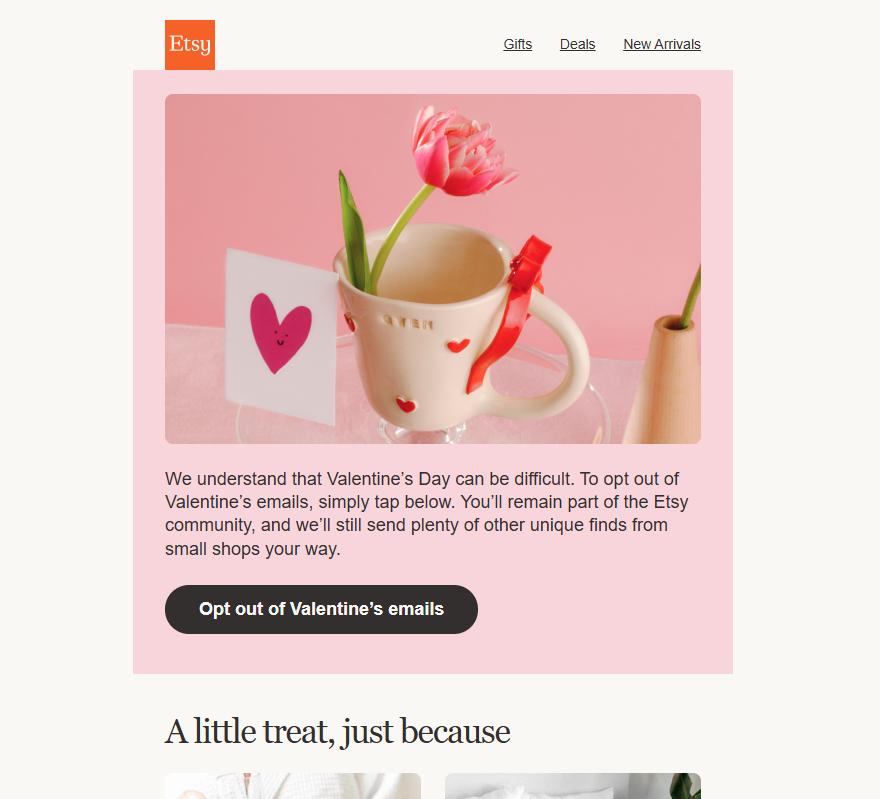
Here’s why that works so well:
- Clear expectation setting: Subscribers know exactly what they’re opting out of
- No guilt, no pressure: The language is respectful and neutral
- Self-segmentation: Interested subscribers stay in, uninterested ones quietly step aside
Etsy isn’t shrinking its audience. Instead, they’re improving its quality.
Why Opt-Out Email Segmentation Beats Guessing
Many marketers think of email segmentation as something you do before a campaign, based on past purchases, clicks, or demographics. Opt-out segmentation flips that idea around.
Instead of predicting behavior, you let subscribers tell you what they want.
Here’s what that unlocks:
1. Stronger subscriber trust
When you acknowledge that not every message is for everyone, you show respect. Subscribers feel seen, not blasted.
2. Better engagement metrics
Your Valentine’s Day emails go only to people who didn’t opt out, meaning opens, clicks, and conversions are naturally higher.
3. Cleaner lists over time
Opt-out segments quietly reduce unsubscribes and spam complaints, which protects deliverability long after the holiday ends.
And the best part? You don’t need advanced automation or dozens of lists to make this work.

Email Deliverability 101: Understanding the Basics of Making it to the Inbox
DOWNLOAD NOWHow to Recreate Etsy’s Valentine’s Day Opt-Out Campaign in Benchmark Email
This entire setup can be done with a single email, a single tag or list, and a single exclusion rule.
Here's the process:
Step 1: Send a preference-based email
Create a simple email with messaging like:
- “Not into Valentine’s Day emails?”
- “We’ll be sending Valentine’s promotions soon. Opt out if they’re not your thing.”
Keep the tone neutral and supportive. This isn’t a sales email; it’s a courtesy.
Step 2: Tag or segment subscribers who opt out
When someone clicks the opt-out link, apply a tag like “Valentine’s Day – Opt Out” or add them to a dedicated list.
In Benchmark Email, tagging makes this quick and reusable. No manual list cleanup required.
Step 3: Exclude that segment from your Valentine’s Day campaigns
When you send your Valentine’s Day emails, simply exclude the opt-out tag or list from the send. Everyone else continues to receive your seasonal content as usual.
Step 4: Reuse the segment year after year
Once the segment exists, you can keep using it. Next February, you already know who prefers to skip Valentine’s messaging, and you don’t have to ask twice.
Where Else This Strategy Works (Beyond Valentine’s Day)
Once you start using opt-out segmentation, it’s hard to stop because it works for more than just one holiday.
Try it for:
- Mother’s Day and Father’s Day (especially sensitive for many audiences)
- Holiday gift guides (for subscribers who don’t shop seasonally)
- Political or cause-based emails (when relevance varies widely)
Any time a campaign could be emotionally charged or narrowly relevant, opt-out segmentation gives you a safer, smarter path forward.
You Don’t Need to Overthink This
Etsy’s campaign works because it’s simple. No complex logic. No automation maze. Just clear communication and respect for subscriber preferences.
That same approach is easy to replicate in the new Benchmark Email—especially if you’re already sending campaigns and want better results without more work.
Try Benchmark Email free and build your Valentine’s Day opt-out segment in minutes

Sign up for a free Benchmark Email account today!
SIGN UP FREEBecause better segmentation isn’t about sending more emails—it’s about sending the right ones.
About the Author:

Content Marketing Manager | Content marketing, inbound funnel, social media, email nurture | Natalie Slyman is an experienced Content Marketing Manager at Benchmark Email with a strong B2B background and a knack for crafting pillar content that boosts SEO and brand authority. She regularly shares actionable insights—from remote-work strategies to AI-powered content workflows—via blog posts and webinars tailored for busy marketers.

A powerfully simple email marketing platform
Sign up for free to see how effortless email marketing can be.
Our Company
Compare
Solutions
Compare
Account
© Polaris Software, LLC Benchmark Email® is a registered trademark of Polaris Software, LLC
© Polaris Software, LLC
Benchmark Email® is a registered trademark of Polaris Software, LLC