



Key Takeaways
- Online forms and pop-up forms serve different purposes, but both help grow your email list. The post explains that both form types are valuable for capturing visitor information and supporting lead generation, even though they operate in different ways.
- Pop-up forms are designed to capture attention at the right moment. Because they can appear based on timing, placement, or user behavior, pop-ups are especially useful for re-engaging visitors, promoting offers, and catching people before they leave your site.
- Embedded online forms offer consistency and easy tracking. Since they live in a fixed location on your site, online forms are easier to measure over time and can support focused campaigns that drive traffic to a specific page or conversion point.
- Pop-up forms are more dynamic, while online forms are more predictable. Pop-ups can be customized based on visitor actions and page behavior, whereas embedded forms provide a steady, always-available way for visitors to subscribe, request information, or share feedback.
- The best strategy is to use both together. Rather than choosing one over the other, the article recommends combining pop-up and embedded forms as part of a broader on-site marketing strategy, then reviewing performance data regularly to improve results.
Website forms come in different forms, each great for different reasons. Their commonality, however, is that they’re great at gathering key information on your website visitors and encouraging them to sign up for your email list.
In this blog post, we’ll discuss two types of website forms: online and pop-up. Both online and pop-up forms are important for converting leads on your website. But they differ in how they get the job done and in the benefits they offer.
A comprehensive marketing strategy will include both of these tactics. However, understanding how, when, and why to employ an online form vs. a pop-up form (and vice versa) is key to making them work. To help you do it, we’ve put together a quick breakdown of each form type and what it can do for you. Here’s what to know.
What are pop-up forms?
Pop-up forms do exactly what they say: pop up on the page at a time and place that you designate in advance. The goal is to capture leads at the most opportune moment, targeting both timing and placement to increase the form’s conversion rate and move more leads down the funnel.
Why pop-up forms are beneficial
While it’s true that pop-up forms provide a momentary disruption to a user’s experience on the page, many marketers will tell you that their benefits outweigh the interruption. Here are some of the strategic advantages that a pop-up form offers:
- They can engage a visitor before the visitor exits your site. You can set a pop-up form to deploy right as someone starts navigating away from a page, providing one last opportunity for engagement before they move on.
- They can be optimized to reach the most people. Unlike embedded forms, which typically live on a designated page, pop-up forms can be placed anywhere they’re most likely to be seen—including your pages that receive the highest website traffic.
- They’re fully customizable. Personalize your pop-ups based on a user’s on-site activities. Based on what they’re doing, you can arrange for the pop-up to facilitate an email newsletter sign-up, a whitepaper download, or a demo request, among other things.
- They help grow your email list automatically. When forms are connected to your email marketing platform, every signup goes exactly where it should. No manual imports and no extra steps.
What are online forms?
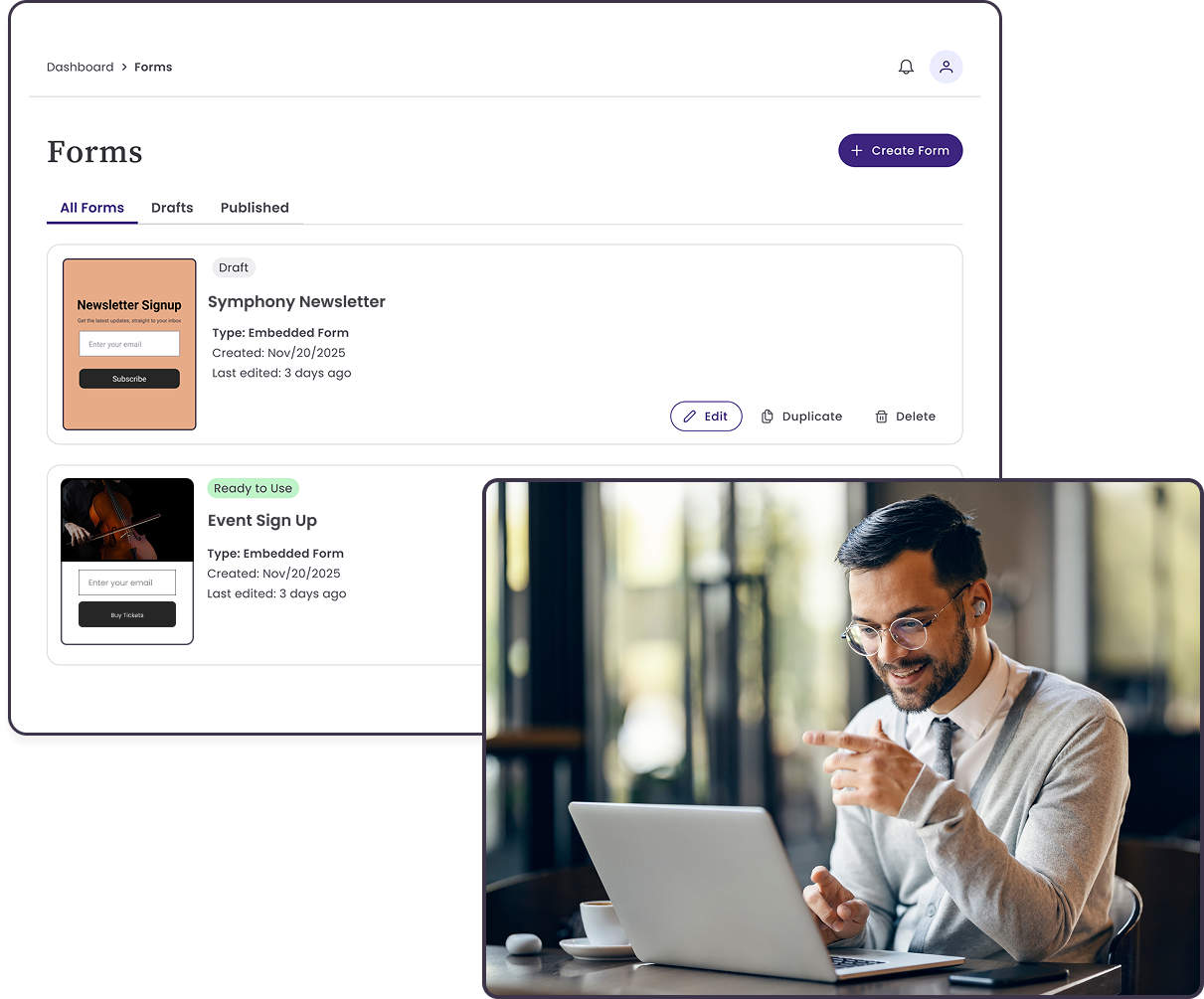
Online forms, or embedded forms, live in a permanent place on your site and serve one set purpose. They’re generally placed on the header or footer of the page, or on their own landing page, based on what you’re trying to achieve and what gets you the best results.
Why online forms are beneficial
Though less dynamic than pop-up forms, you’re still likely to see embedded forms in ample use on most brands’ websites. Here’s why.
- They’re innately data-driven. Because online forms appear consistently on certain pages, it’s easy to track their performance. You can also use data-tracking techniques, such as heat mapping, to figure out where they’re best suited to live.
- They’re static. You can target efforts specifically around driving traffic to an embedded form’s landing page. This includes using online promotions, organic and paid ads, and other tactics to ensure more eyes are on the form.
- They can generate helpful feedback. Online forms don’t only have to be used to collect contact information. You can also use an embedded form to gather user feedback, such as a place for users to quickly and easily leave a review or rate your product or service.
- They create a steady stream of subscribers. Embedded forms work quietly in the background, helping you grow your list day after day without disrupting the user experience.
With Benchmark Email’s built-in forms, your forms won’t just capture attention; they’ll send new subscribers straight into your contact list, ready for your next campaign.
Why both types of forms matter for your business
The question isn’t whether you should use pop-up forms or online forms — it’s how you use them together to get the best results.
Every effective marketing strategy relies on a variety of methods and approaches. A mixed approach, one that uses both types of forms, for example, is the best way to get the most out of your strategy and see more people provide their information and sign up for your email marketing.
Any comprehensive on-site marketing strategy should include thoughtfully placed pop-up and embedded forms, and you should conduct regular data check-ins to see what’s working and where. Based on that information, you’ll be able to ensure you get the most bang for your buck and that any and all forms on your site are set up for success.
Website forms are one of the easiest ways to grow a healthier email list. And with forms now available in the new Benchmark Email, getting started will be simpler than ever.

Sign up for a free Benchmark Email account today!
SIGN UP FREEFrequently Asked Questions
What’s the difference between pop-up forms and online forms?
Pop-up forms appear based on timing or behavior to grab attention in the moment, while online (embedded) forms live permanently on your site. Both are effective—it just depends on how and when you want visitors to engage.
Do pop-up forms hurt the user experience?
Not when they’re used thoughtfully. Well-timed pop-ups, like exit-intent or scroll-based forms, can feel helpful rather than disruptive, especially when the offer is relevant.
Where should I place an embedded form on my website?
Common high-performing spots include your homepage, blog posts, footer, and dedicated signup pages and landing pages. The key is visibility without friction.
Can I use both pop-up and online forms at the same time?
Absolutely, and you should. Using both gives you more chances to capture subscribers without relying on a single tactic.
How do forms help email marketing perform better overall?
Better forms mean better lists. When subscribers join intentionally through your website, engagement tends to be higher—and that leads to stronger open rates, clicks, and long-term results.
Will Forms work directly with Benchmark Email?
Yes, with Benchmark Email, you can create static forms and add them to your site, making it easy to collect subscribers and manage your email list in one place.
About the Author:

Content Marketing Manager | Content marketing, inbound funnel, social media, email nurture | Natalie Slyman is an experienced Content Marketing Manager at Benchmark Email with a strong B2B background and a knack for crafting pillar content that boosts SEO and brand authority. She regularly shares actionable insights—from remote-work strategies to AI-powered content workflows—via blog posts and webinars tailored for busy marketers.