


What Busy Marketers Can Learn from 3-Minute Emails (and Why Less Is More in 2026)
Let’s be honest: most marketers aren’t sitting around wondering how they can make their emails longer. They’re wondering how to make them better — ideally, without sacrificing an entire afternoon to a single subject line.
But somewhere along the way, email marketing picked up the idea that “more” must be better. More sections. More images. More CTAs. More scrolling. More time spent tweaking spacing by 0.5 pixels. (We’ve all been there.)
For 2026, the trends will look very different. The emails winning inboxes — and winning back marketers’ sanity — are the ones that take a couple of minutes to create and ten seconds or less to read.
Let’s talk about why shorter, simpler emails outperform the ornate newsletter masterpieces of years past… and how you can send them without sweating through your to-do list.
Why 3-Minute Emails Are Taking Over
Three big shifts are happening right now, and together, they’re changing the way we write and design email.
1. Attention spans aren’t shrinking — inbox competition is growing
It’s not that your audience can’t focus. It’s that they don’t want to focus on emails that feel like another task.
Short, simple messages feel like a relief. Easy to skim. Easy to act on. Easy to close, feeling smarter, not stressed.
2. Mobile now leads the reading experience
Over half of email opens happen on phones. And on a phone, six paragraphs feel like a novel.
This is why you’ll notice successful emails using:
- One-sentence paragraphs
- Bullets
- Bolded takeaways
- Clear, single CTAs
You’re writing for the thumb, not the desktop scroll bar.
3. Marketers are tired (and want their time back)
No one has time for three-hour builds, endless resizing, or manually nudging elements until they snap into place. The rise of cleaner, faster tools — including the Benchmark Email builder — is a response to that exhaustion.
Less time designing = more time thinking strategically.
The Data Behind “Less Is More”
Most email platforms publish similar trends year after year:
- Shorter emails = higher click-through rates: People click when they’re not overwhelmed.
- Fewer CTAs = clearer decisions: One CTA often beats three.
- Cleaner layouts = better mobile engagement: No surprise — simple loads faster, reads faster, and feels better.
But the most compelling data point is this: Emails you actually finish writing get sent. Emails you struggle with often don’t.
The fastest emails are the ones your audience sees most consistently. And consistency, not complexity, is what drives meaningful results.
What Counts as a “3-Minute Email”?
Think of it as your “espresso shot” version of email marketing: short, strong, no fluff. A 3-minute email usually includes:
- A clear headline
- 2–3 short paragraphs
- Bullets or a simple tip
- One visual (optional)
- One CTA
No extra sections. No massive banner. No 14-image collage. Just value delivered with clarity and confidence.
How to Write Shorter Emails Without Feeling Like You’re Cutting Corners
1. Start with one purpose — not three
Every email should have one job:
- Teach
- Announce
- Remind
- Showcase
- Invite
If your email is trying to do all five, your reader won’t do any of them.
Shortcut question: “What’s the one thing I want them to do or understand?”

2. Use the “10-second test”
After writing your draft, skim it for ten seconds. If your main point isn’t apparent, it’s too long.
3. Write as you talk
Short sentences. Clear structure. Warm tone. The same voice you’d use in a quick Slack message.
4. Don’t bury the value
Put your takeaway in the first two lines. No cliffhangers. No build-up. No drama.
5. Use structure that feels breathable
Spacing is your friend. Try:
- One-line hook
- Short explanation
- Bullet points
- CTA
This reads beautifully on mobile and saves your reader from wall-of-text syndrome.
6. Use smart tools when you get stuck
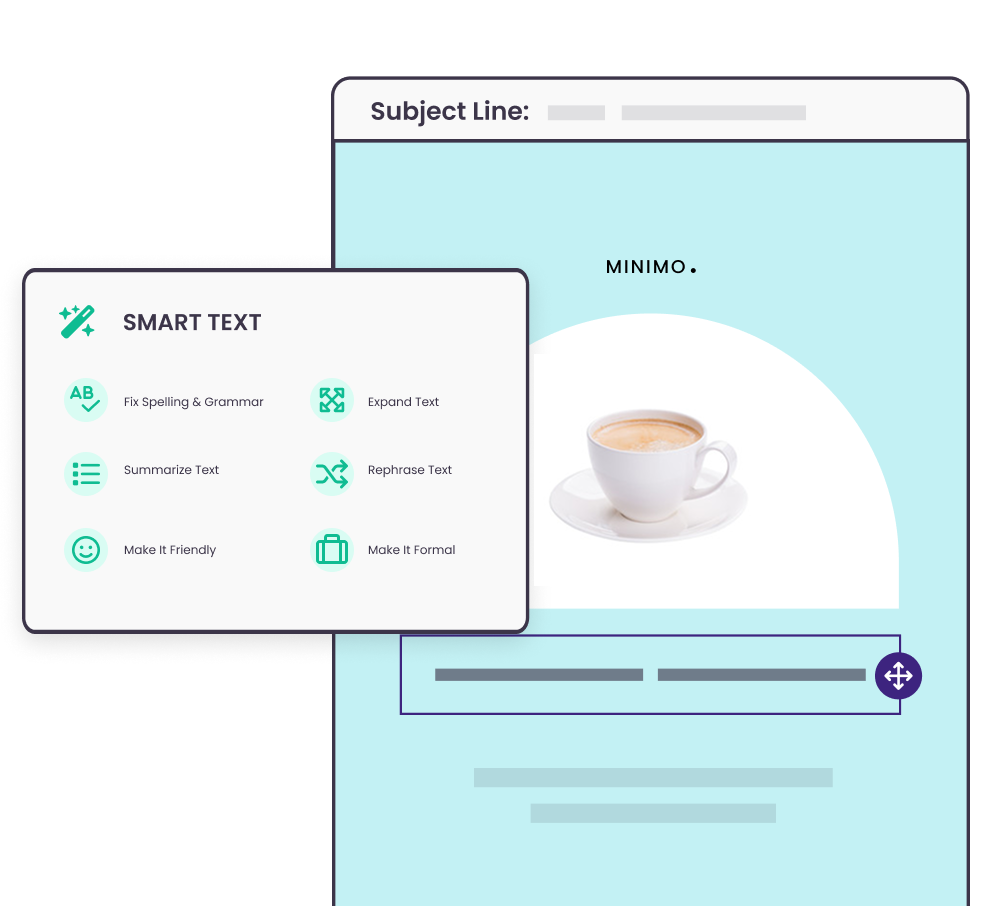
Benchmark Email includes built-in AI helpers like:
- Smart Text (for rewriting or simplifying copy)
- Smart Headings
- Easy block swapping
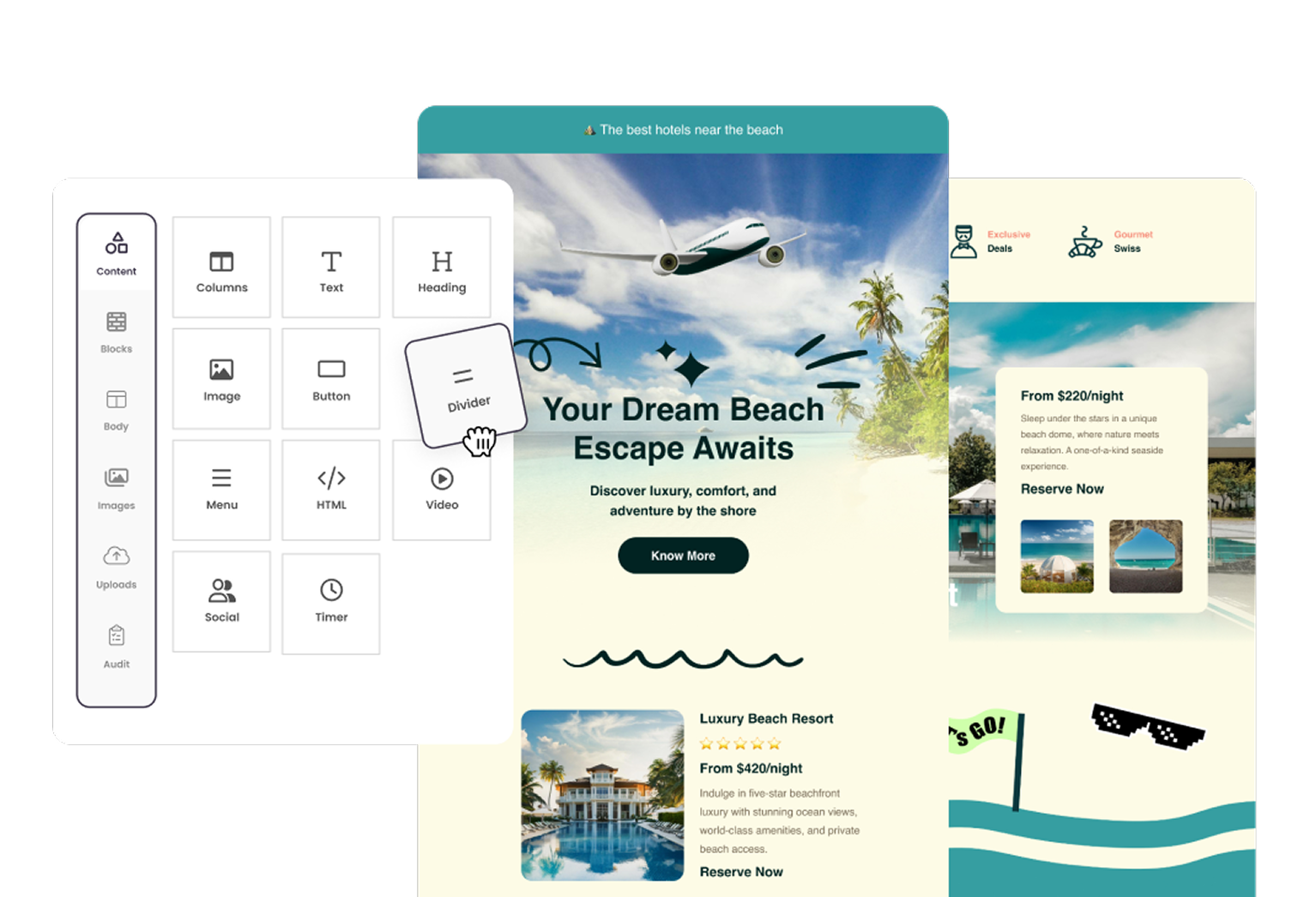
- Drag-and-drop layouts that keep everything aligned
If writing is slowing you down, these tools lighten the load without changing your voice.
Examples of High-Performing 3-Minute Emails
Here are a few formats you can steal immediately:
The Quick Tip
Subject: A tiny tip that makes a big difference
Body:
Here’s one small change that can make your day easier:
[One-sentence advice]
Try it today and feel the difference.
The One-Question Email
Subject: Can we ask you something?
Body:
What’s one thing you’re focusing on this month?
Hit reply — we’re curious.
The Micro-Announcement
Subject: It’s here 🎉
Body:
Just launched: [thing].
Here’s what it does in one sentence: [value].
See it in action → CTA
The 3-Bullet Update
Subject: This week, in 10 seconds
Body:
Here’s what’s new:
- Update 1
- Update 2
- Update 3
That’s it — you’re all caught up.
These emails work because they respect the reader’s time and the marketer’s bandwidth.
Why This Matters for 2026 and Beyond
We’re moving into an era where simplicity isn’t just a preference — it’s a strategic advantage.
For marketers:
Shorter emails mean more consistency, less burnout, and faster execution.
For readers:
Shorter emails mean clarity, ease, and trust.
For businesses:
Shorter emails mean stronger engagement, cleaner metrics, and better long-term relationships.
Everyone wins when you stop trying to impress and start trying to communicate.
The Bottom Line
You don’t need a complex layout or a novel-length message to make an impact. The most effective emails in 2026 will be the ones that deliver value quickly, confidently, and simply.
A three-minute email isn’t a shortcut — it’s a strategy. And it might just be the thing that makes email marketing feel easier than your morning routine.

Sign up for a free Benchmark Email account today!
SIGN UP FREEAbout the Author:

Content Marketing Manager | Content marketing, inbound funnel, social media, email nurture | Natalie Slyman is an experienced Content Marketing Manager at Benchmark Email with a strong B2B background and a knack for crafting pillar content that boosts SEO and brand authority. She regularly shares actionable insights—from remote-work strategies to AI-powered content workflows—via blog posts and webinars tailored for busy marketers.

A powerfully simple email marketing platform
Sign up for free to see how effortless email marketing can be.
Our Company
Compare
Solutions
Compare
Account
© Polaris Software, LLC Benchmark Email® is a registered trademark of Polaris Software, LLC
© Polaris Software, LLC
Benchmark Email® is a registered trademark of Polaris Software, LLC