


Types of Content That Will Re-Energize Your Marketing Strategy in 2026

A few years ago, content strategy was largely about volume. More blog posts. More social updates. More emails. Many marketers focused on staying visible across as many channels as possible, often at the cost of focus, consistency, and sanity.
But now, that approach feels outdated.
Today’s marketing landscape rewards clarity, relevance, and efficiency, especially for small teams. Audiences are more selective, algorithms are more demanding, and marketers have less time to experiment aimlessly.
The good news? You don’t need more content. You need the right types of content, formats that work harder, travel further, and actually re-energize your strategy instead of draining it.
Let’s break down the content types that matter most in 2026, why they work, and how small teams can use them without burning out.
What’s Changed Over the Years (and Why It Matters)
A few years ago, content trends emphasized:
- Long-form everything
- Being present on every platform
- Rapid experimentation
Today, the shift is clear:
- Shorter attention spans
- Higher expectations for value
- More competition for every click
- Smaller teams doing bigger jobs
The most effective content now does at least one of these:
- Saves the audience time
- Helps them make a decision
- Teaches something quickly
- Builds trust and familiarity
With that lens, here are the formats re-energizing modern marketing strategies.
1. Short-Form Video That Actually Teaches Something
Short-form video isn’t new, but how it’s used has matured.
The best-performing short videos:
- Answer one specific question
- Demonstrate one clear idea
- Deliver value in under 60 seconds
Think:
- “One quick tip” videos
- Mini explainers
- Before/after examples
- Simple walkthroughs
For small teams, short-form video works because it:
- Doesn’t require high production
- Can be repurposed across platforms
- Builds familiarity fast
Why it re-energizes strategy: It creates momentum. One idea can become a video, a social post, an email snippet, and a blog section.
Example: Benchmark Email’s AI Visibility Clip
While creating a full-blown 10-week course is an excellent way to highlight your expertise, authority, and trustworthiness, it’s not necessary, especially since you can achieve the same effect with a slightly less resource-intensive approach.
For example, by creating a video clip, like Benchmark Email’s AI Visibility piece, you can educate your audience on something super important without taking up tons of their time.
2. Interactive Content That Pulls People In
Static content still matters, but interactive content stands out in crowded feeds.
Popular interactive formats in 2026 include:
- Quizzes
- Checklists
- Self-assessments
- Calculators
- “Choose your path” guides
These formats work because they shift the experience from reading to participating.
For example:
- “Is your email strategy working?” quizzes
- “Which content format fits your team?” assessments
- Interactive onboarding guides
Why it re-energizes strategy: Interactive content boosts engagement without requiring constant publishing. One asset can deliver value for months.
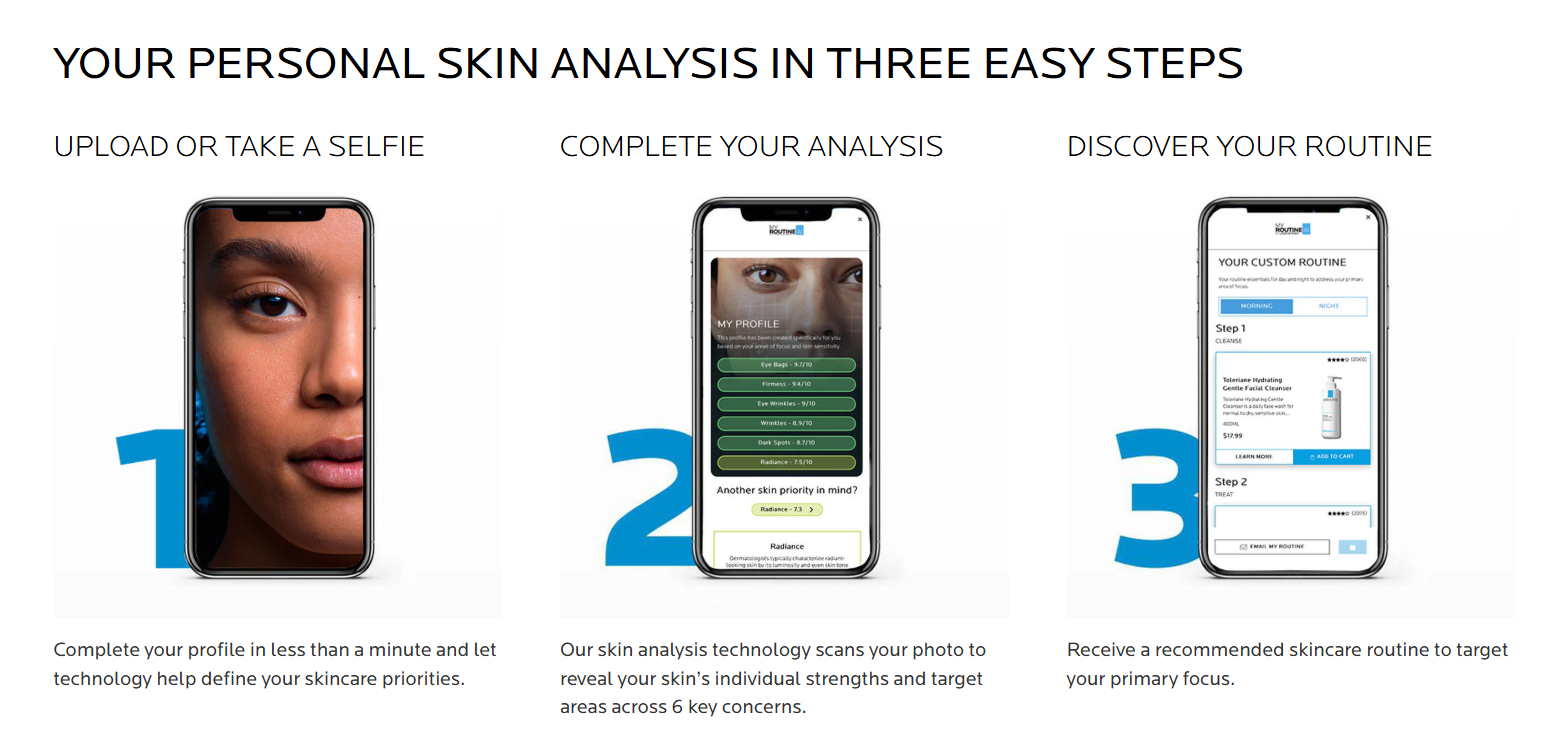
Example: La Roche-Posay’s Skin Analysis Tool
La Roche-Posay has a simple three-step process to help you get a skin analysis and recommendations on which products are best for your skin type.
Source: https://www.laroche-posay.us/find-your-routine/myroutine-ai-analysis.html
3. AI-Assisted Visual Content (Used Thoughtfully)
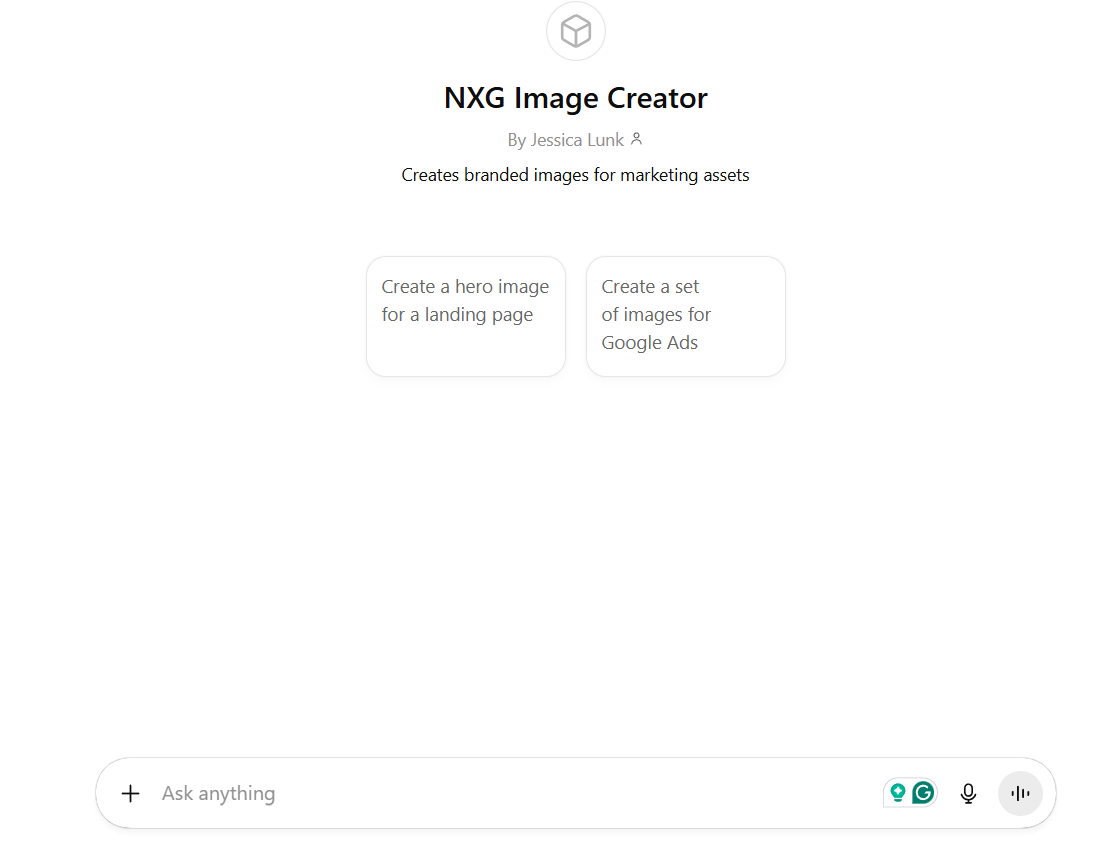
AI-generated visuals have become mainstream, but the most effective brands use them with intention.
In 2026, AI visuals are most useful for:
- Concept illustrations
- Simple graphics and diagrams
- Campaign visuals and variations
- Supporting blog and email content
They’re not replacing designers, but they are helping small teams move faster.
The key difference from early AI adoption:
- Less novelty
- More consistency
- Clear brand guidelines
Why it re-energizes strategy: Visual content no longer blocks execution. Teams can create supporting assets quickly without stalling campaigns.
Source: ChatGPT
4. Email-First Content That Anchors Everything Else
While content formats evolve, one channel has stayed central: email.
In 2026, smart teams treat email as:
- The primary relationship channel
- The distribution engine for content
- The home base for messaging
Effective email-first content includes:
- Curated insights
- Educational series
- Campaign roundups
- Repurposed social and video content
This approach works especially well with tools like Benchmark Email, where simple workflows make it easy to reuse and adapt content without starting from scratch.
Why it re-energizes strategy: Email extends the life of every piece of content, and keeps you connected even when algorithms change.
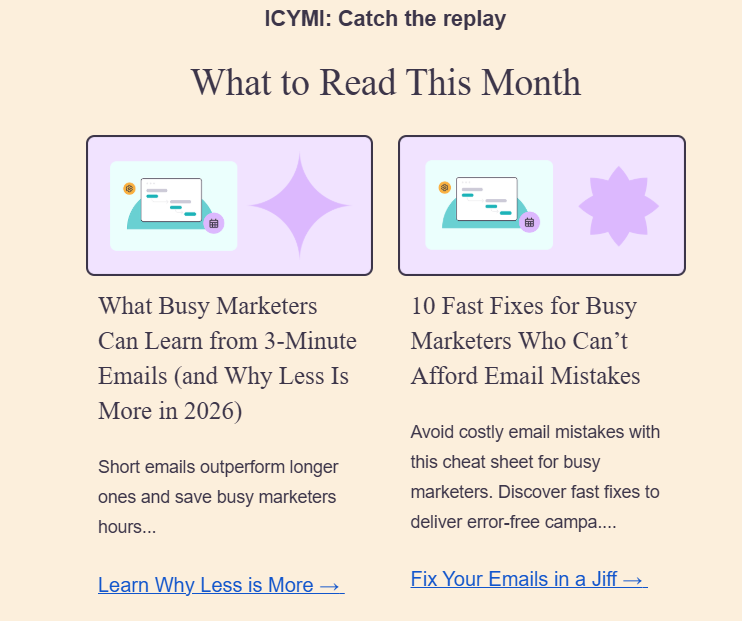
Example: Benchmark Email Newsletter
Blogging is a wonderful way to drive organic traffic to your website. But if your marketing goals for 2026 include more than just increasing audience reach, you need to experiment with alternative distribution methods.
At Benchmark Email, we use our email newsletters to help distribute our blog content and spread education.
5. Opinionated Thought Starters (Not Fluff)
Generic content is easy to ignore. In 2026, audiences gravitate toward brands that take a clear point of view. That doesn’t mean being controversial; it means being specific.
Examples:
- “Why weekly emails outperform daily posting.”
- “The content metric most teams overvalue”.
- “What we stopped doing, and why.”
These pieces:
- Spark conversation
- Encourage replies and shares
- Build authority over time
Why it re-energizes strategy: Opinion-driven content differentiates you without requiring massive production.
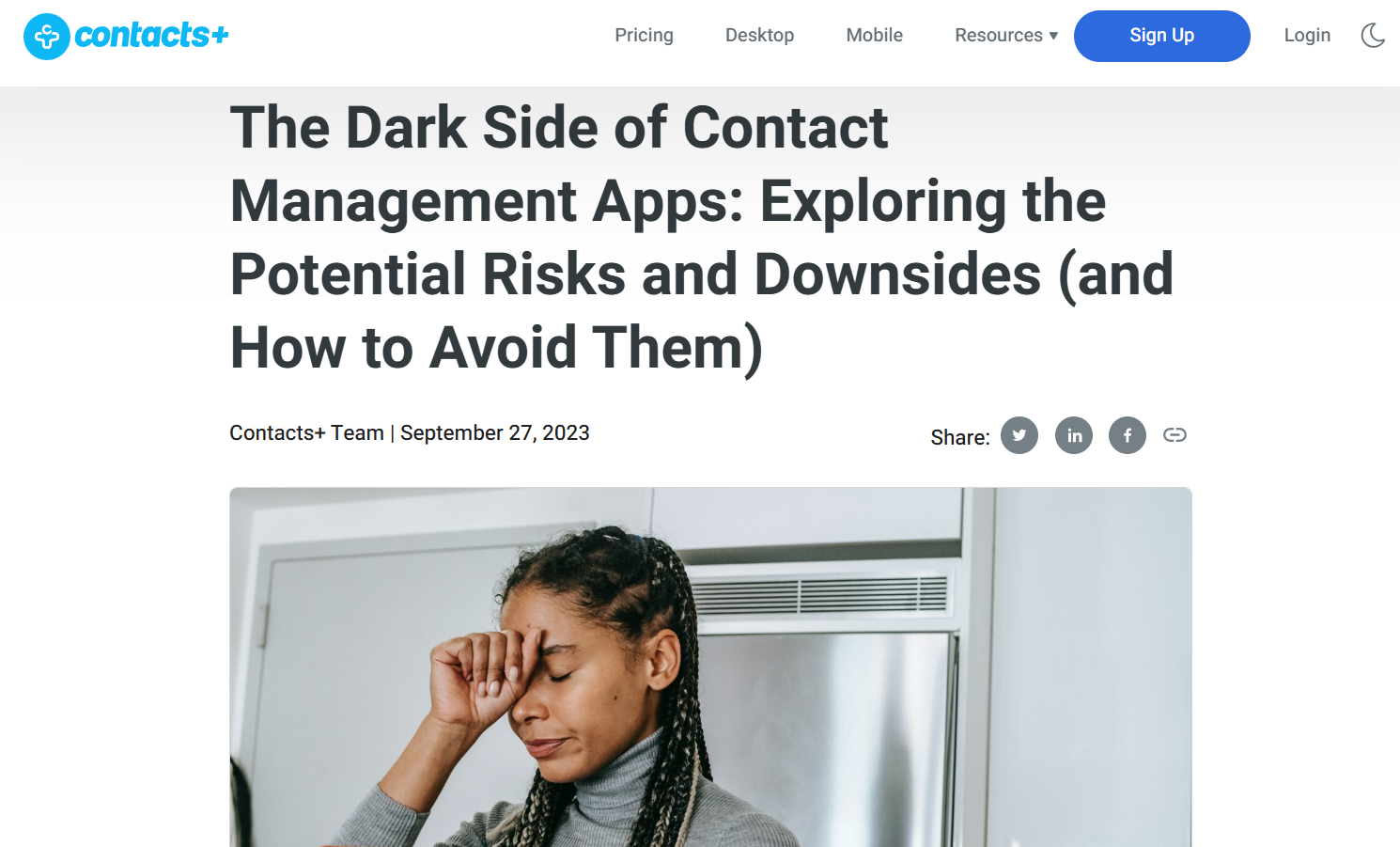
Example: Contacts+ Blog Post
Contacts+, a contact management app, used this approach with a contrarion blog post that discussed the pitfalls of most contact management apps. A bold move, but it enabled a discussion around weaknesses in the space and highlighted how it’s different.
6. Repurposable “Core” Content Campaigns
Instead of creating endless standalone pieces, small teams are building core content campaigns. One strong idea becomes:
- A blog post
- An email
- Several social posts
- A short video
- A downloadable checklist
This model prioritizes depth over breadth.
Why it re-energizes strategy: It reduces creative fatigue and maximizes ROI on every idea.
Example: Benchmark Email’s Webinar
For all our webinars, we create short clips to share on social media. These clips highlight key points and takeaways in a more digestible way, allowing us to share them on a different channel where others may be more engaged.
7. Practical Templates and Frameworks
Audiences are increasingly drawn to content they can use immediately. High-performing examples include:
- Email templates
- Planning frameworks
- Swipe files
- Step-by-step checklists
These assets:
- Save time
- Feel generous
- Encourage repeat engagement
They’re especially effective when paired with email delivery, where subscribers can easily save and revisit them.
Why it re-energizes strategy: Utility builds loyalty, and loyalty compounds.
Example: Benchmark Email’s Email Templates
We not only offer numerous free email templates on our website, but we also provide hundreds of templates that our users can easily access for their campaigns. It makes email creation super simple!

What Content Types Are Losing Steam?
Just as important as what’s rising is what’s fading. In 2026, content that tends to underperform includes:
- Overly long, unfocused blog posts
- Generic listicles with no point of view
- One-off content with no follow-up
- Platform-specific content with no repurposing plan
The issue isn’t the format, it’s the lack of strategy behind it.
How Small Teams Can Execute Without Burning Out
The most successful content strategies in 2026 share a few traits:
- Fewer formats, used consistently
- One core message per campaign
- Clear reuse and repurposing plans
- Simple tools that don’t slow execution
This is where simplicity becomes a growth advantage. When your tools and workflows are intuitive, content creation stops feeling like a treadmill and starts feeling manageable again.
Final Takeaway: Re-Energizing Content Starts with Focus
The biggest lesson for this year is clear: content works best when it’s intentional. You don’t need to chase every new format. You need to choose the ones that:
- Fit your audience
- Fit your bandwidth
- Fit your goals
Short-form video, interactive tools, AI-assisted visuals, and email-first campaigns aren’t trends for the sake of novelty. They’re responses to how people actually consume content in 2026.
When you focus on clarity, usefulness, and reuse, your content strategy doesn’t just feel fresh; it becomes sustainable.
About the Author:

Content Marketing Manager | Content marketing, inbound funnel, social media, email nurture | Natalie Slyman is an experienced Content Marketing Manager at Benchmark Email with a strong B2B background and a knack for crafting pillar content that boosts SEO and brand authority. She regularly shares actionable insights—from remote-work strategies to AI-powered content workflows—via blog posts and webinars tailored for busy marketers.