



Mailchimp? Yeah, everyone knows the name. But just because something’s famous doesn’t mean it’s right for you. Over the years, many businesses have started exploring Mailchimp alternatives because of:
- Rising pricing as lists grow
- Complex automation setups
- Feature overload
- Confusing tier structures
- A shift toward a broader “all-in-one” ecosystem
If you’re comparing options, here are some of the best Mailchimp alternatives in 2026 and the types of users each platform is best suited for.
1. Benchmark Email – best for busy marketers who want simplicity

If you’re looking for a Mailchimp alternative to make email marketing feel easier, not more complicated, Benchmark Email is designed for that exact purpose. Instead of layering on more channels and workflows, Benchmark focuses on doing core email exceptionally well:
- Fast, intuitive drag-and-drop builder
- Smart segmentation without spreadsheet exports
- Clear, actionable reporting
- AI tools that polish your content (not replace it)
- Transparent, contact-based pricing
Why teams switch from Mailchimp
Many marketers find that as Mailchimp expands into CRM, ads, and automation ecosystems, the platform becomes heavier. The most common friction points:
- Automation complexity
- Feature clutter
- Pricing jumps as contacts grow
- Too many tabs, too many decisions
Benchmark takes a different approach: Core email first and advanced complexity later.
According to Benchmark’s 2026 Email Marketing Benchmarks Report, the average open rate across industries is approximately 25.55%, with mid-sized businesses often seeing higher rates when engagement and segmentation are strong.
Relevance drives results, not feature count.
Best for: Marketing managers, mid-sized teams, and businesses that want email marketing to be the easiest part of their day.
2. Brevo, formerly Sendinblue – best for multi-channel messaging
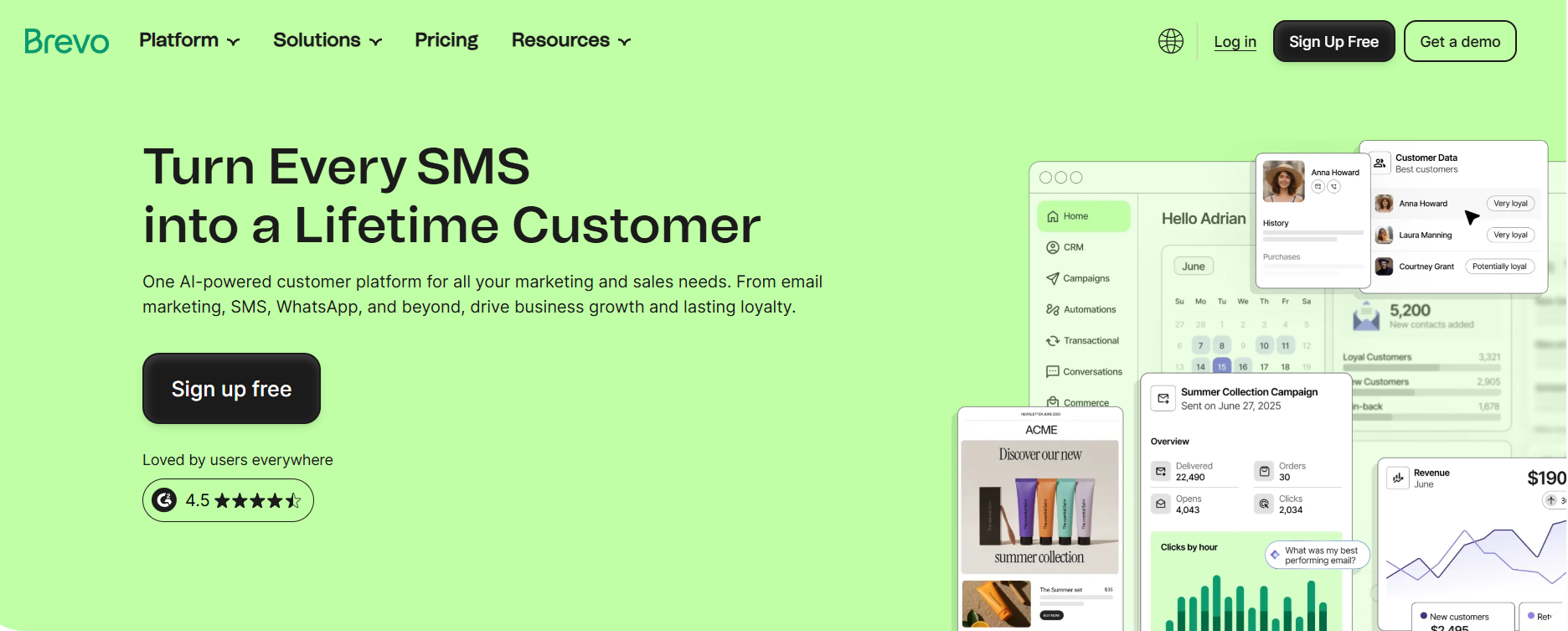
Brevo offers email, SMS, chat, and CRM functionality on a single platform. If you want messaging across multiple channels, it can be appealing. However, multi-channel depth can introduce additional setup time and complexity.
Best for: Businesses prioritizing integrated SMS and transactional messaging.
3. ActiveCampaign – best for advanced automation and CRM

ActiveCampaign is well known for its powerful automation builder and CRM integrations. You can create highly customized customer journeys with detailed logic.
The trade-off? A steeper learning curve.
Best for: Sales-driven organizations and teams are ready to invest time in an automation strategy.
4. Kit, formerly ConvertKit – best for creators

Kit focuses heavily on creators, bloggers, and course builders. It offers:
- Tag-based subscriber organization
- Simple automation sequences
- Creator-focused templates
It’s streamlined for audience monetization but may feel limited for larger business use cases.
Best for: Content creators and online entrepreneurs.
5. GetResponse – best for funnels and webinars
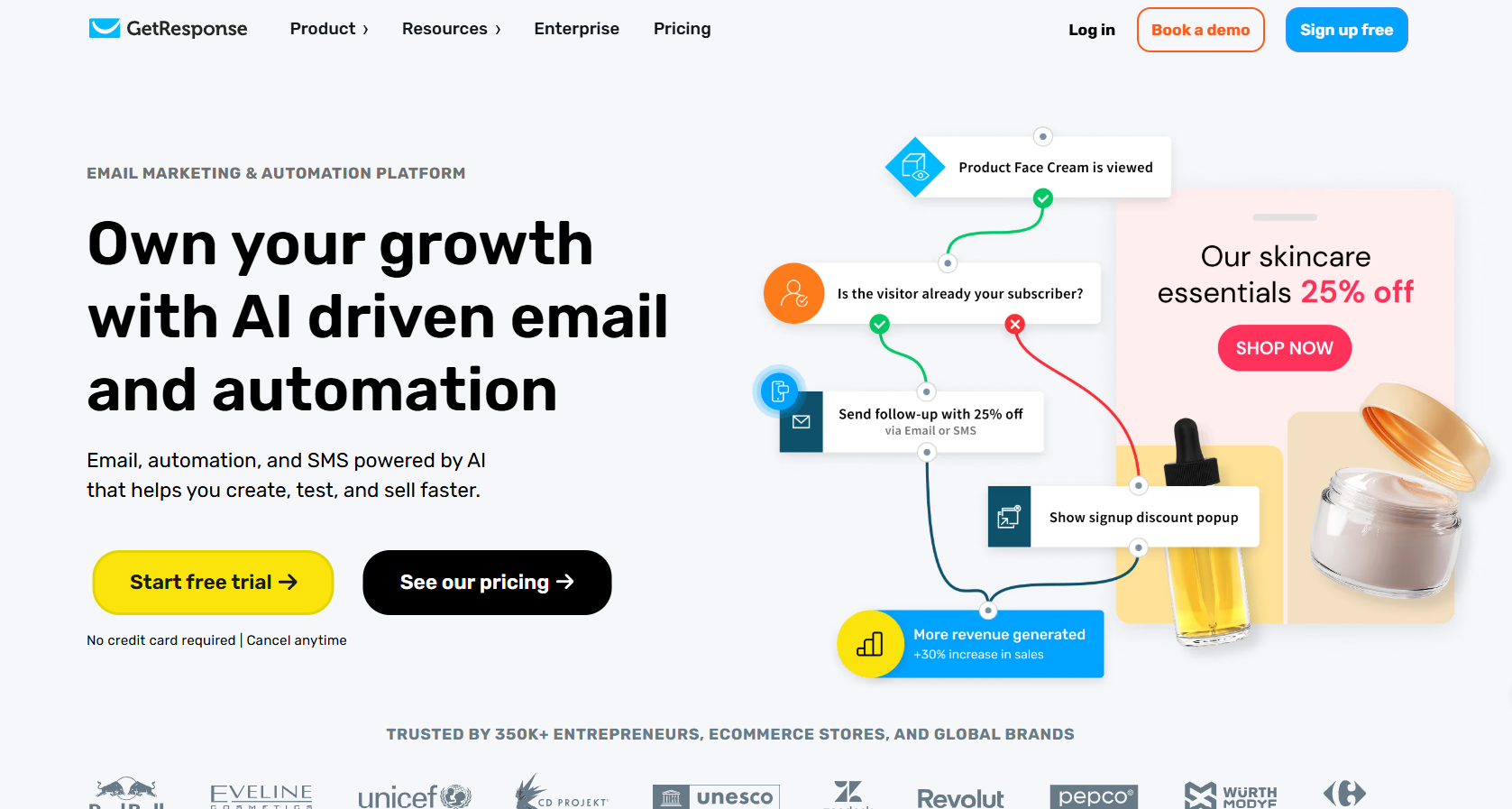
GetResponse combines email marketing with:
- Funnel builders
- Webinar hosting
- Landing pages
This bundled approach appeals to businesses offering information products or online events. However, breadth can increase platform complexity.
Best for: Education and webinar-based businesses.
6. AWeber – best for simplicity and small businesses

AWeber has long catered to entrepreneurs and small teams. It offers straightforward email creation and basic automation without overwhelming dashboards. It’s less complex than some enterprise tools but may lack more modern UX elements.
Best for: Small businesses and solopreneurs.
7. HubSpot – best for full CRM ecosystem
HubSpot provides a comprehensive CRM and marketing automation ecosystem. Its email tools integrate deeply with sales and service workflows. However, pricing can increase significantly as you scale.
Best for: Large teams wanting full CRM alignment across departments.
8. Constant Contact – best for event-focused marketing

Constant Contact remains a strong choice for organizations focused on event marketing. It includes tools tailored to event promotion and local business marketing. However, its interface may feel dated compared to newer platforms.
Best for: Event-heavy organizations and traditional small businesses.
Why many teams look for Mailchimp alternatives
Mailchimp’s shift toward becoming an all-in-one marketing ecosystem has changed its positioning. For some businesses, that’s a strength. For others, it introduces:
- Feature fatigue
- Higher learning curves
- Increased pricing tiers
- More complexity than necessary
If email is only one part of your job, complexity becomes a real cost. Time is limited, and decision fatigue is very real.
What to consider when choosing a Mailchimp alternative
Instead of focusing only on feature lists, ask:
- How much time do I realistically spend on email each week?
- Do I need advanced automation now or strong fundamentals?
- Is my biggest challenge strategy or tool complexity?
- Do I want more features, or more clarity?
Many mid-sized teams find that doing core email exceptionally well yields better results than trying to manage multiple channels within a single platform.
Simplicity vs. feature overload
There’s a common assumption in marketing software: More features equal better performance.
But oftentimes, more features equal more configuration, and more configuration equals slower execution. And slower execution leads to inconsistent sending. Consistency is what drives engagement, which is why many businesses exploring Mailchimp alternatives prioritize platforms that:
- Reduce friction
- Simplify segmentation
- Offer clear reporting
- Provide transparent pricing
Final thoughts
Mailchimp remains a powerful and well-known email marketing platform. But it’s not the only option, and it’s not the best fit for every team. The right Mailchimp alternative depends on your priorities:
- Want advanced automation and CRM? ActiveCampaign or HubSpot may fit.
- Need multi-channel messaging? Brevo could work.
- Focused on creators? ConvertKit shines.
- Want simple, intuitive email marketing built for busy teams? Benchmark Email is designed for that.
In 2026, the best platform isn’t the one with the most features. It’s the one that makes it easiest to send relevant, effective emails consistently. And that often starts with simplicity.
Frequently asked questions
Why do marketers switch away from Mailchimp?
Rising prices, complex automations, and a crowded dashboard are the top reasons teams look elsewhere. A leaner email platform with contact-based pricing, an easy drag-and-drop editor, and clear reporting—like Benchmark Email—can save time and budget.
Are there any free Mailchimp alternatives?
Yes. Several email services offer forever-free plans for smaller lists, usually up to 500–1,000 contacts and a limited number of sends each month. Free tiers are handy for testing, but review upgrade costs early so you know what to expect as your list grows.
How can I keep my emails out of the spam folder when I switch platforms?
Send from a verified domain, clean your list regularly, and match content to subscriber interests. Avoid spam-trigger words, test before sending, and track engagement. Many tools—including Benchmark Email—provide built-in spam checks and deliverability tips to help your messages land in the inbox.

Sign up for a free Benchmark Email account today!
SIGN UP FREEAbout the Author:

High level marketing, technical email topics, email trends | Jessica Lunk is the VP of Growth Marketing at Benchmark Email, where she combines strategic flair with hands-on expertise to help busy marketers elevate their email game. Delivering timely insights on list hygiene, ROI, and email deliverability, she’s a go-to voice for practical marketing wisdom.

A powerfully simple email marketing platform
Sign up for free to see how effortless email marketing can be.
Our Company
Compare
Solutions
Compare
Account
© Polaris Software, LLC Benchmark Email® is a registered trademark of Polaris Software, LLC
© Polaris Software, LLC
Benchmark Email® is a registered trademark of Polaris Software, LLC