


From “Play to Buy”: How Gamified Emails Convert Attention into Action

Have you noticed how crowded your inbox has become? It looks like an endless pile of emails about discounts, product updates, teasers, event invitations—you name it! It’s still crucial for brands to showcase their products and engage subscribers, so they are turning to something simple yet uncommon: games.
According to statistics, gamified emails can increase engagement by 48%. Such games pull the same triggers that got you hooked on watching the tenth cat video in a row or opening your favorite app: curiosity, anticipation, and dopamine hits when we unlock something and get rewarded.
Adding games to newsletters can turn passive subscribers into returning customers. It can be a quick quiz about a new feature, a scratch card with a discount, or a spin-to-win wheel with various rewards. In this article, we’ll examine the psychology of email gamification and introduce practical email game mechanics, focusing on best practices and how to avoid common mistakes to create successful games.
The Psychology Behind Email Gamification
Let’s take a closer look at why email gamification actually works and makes subscribers wait for your next email. The three key triggers responsible for such increased engagement (even while using simple mechanics, such as quizzes or scratch cards) are as follows:
- Motivation triggers: Games offer players a small challenge and a clear outcome (reward).
- Excitement boost: While playing a game, your recipient has to put in a bit of effort to complete a task, not just skim the email and forget about it. This process boosts memory retention and makes your brand recognizable in a crowded inbox. As a result, it’s not just an email anymore, but a memorable experience.
- Social interaction: Who wouldn’t like to have fun once in a while, especially during a busy working day or when taking a break during a holiday rush? When we talk about competitive games with leaderboards and achievements, people feel connected to other players, which makes them an important part of a community.
Most Effective Game Mechanics for Emails
There are suitable game mechanics for every email type. The most successful mechanics are simple, understandable, and require minimal effort from the subscriber. Here are three game mechanics that drive positive results:
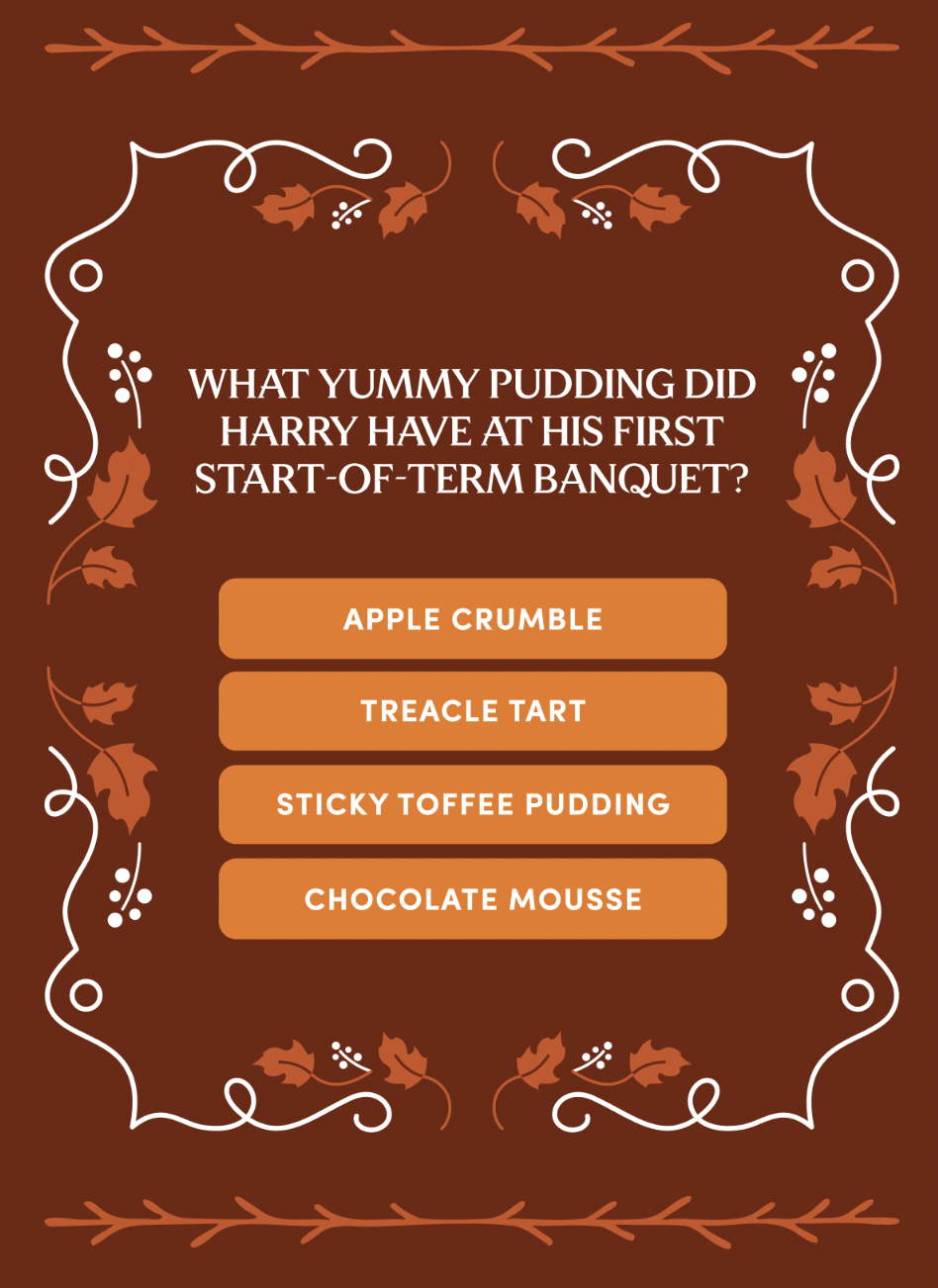
1. Quizzes
Quizzes feel personal as by answering several quick questions, the recipient can discover the most suitable product for their needs, get personalized recommendations, or just learn something new about themselves (I guess everyone took one of those personality tests and got the “Wow, that’s so me!” effect). Besides educational quizzes about your product or recipients’ preferences, you can also add fun tests to entertain your target audience (especially during holidays).
Best uses:
- Product recommendations.
- Preference gathering.
- Segmentation for future campaigns.
(Source: Email from Harry Potter Fan Club)
2. Scratch Cards
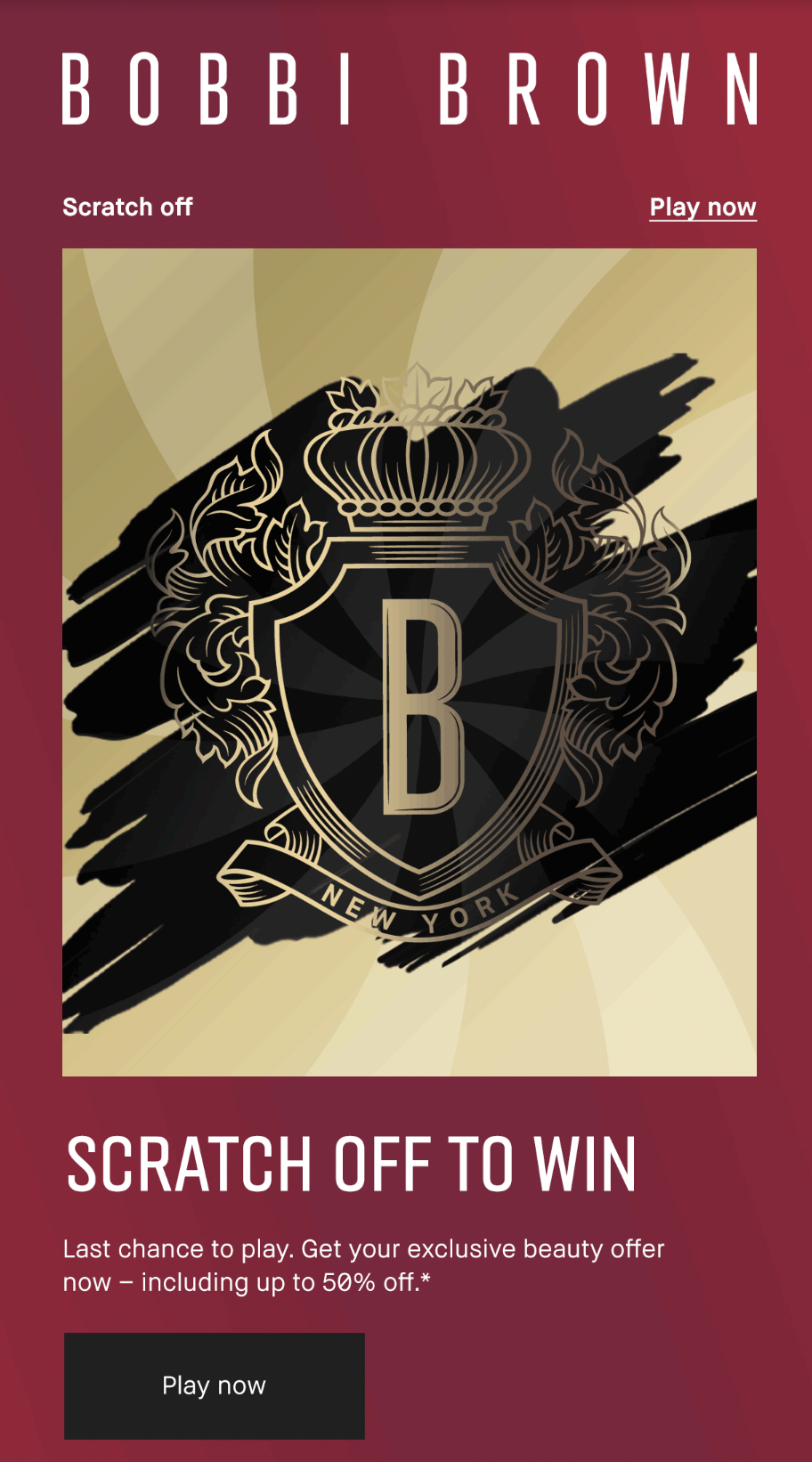
What could trigger curiosity better than reveal-based actions? A recipient sees that a reward is behind a mysterious card, and that anticipation boosts participation rates. It’s like having a lottery ticket with a guaranteed reward. Such a game is perfect for presenting promo codes or limited-time offers playfully, standing out from the competition during seasonal campaigns, and revealing information in an exciting way.
Best uses:
- Seasonal promotions.
- Limited-time or exclusive offers.
- Event-driven campaigns.
(Source: Email Love)
3. Spin-to-Win Wheels
This game is instantly recognizable and fun to play. You can use it to offer gifts to your subscribers, reactivate dormant recipients, or jazz up your flash sales. However, it’s essential to ensure the rewards you offer are fair and transparent to prevent recipients from feeling frustrated and from unsubscribing.
Best uses:
- Discounts for loyal customers.
- Subscriber reactivation.

(Source: Email from Estée Lauder)
Getting Gamification Right: Best Practices
Your main task in creating a gamified email is to ensure that the game supports your main message and guides the recipient to completing the desired action rather than distracting them. Such an email experience works best when a game is straightforward, has clear rules, and is tied to a marketing goal.
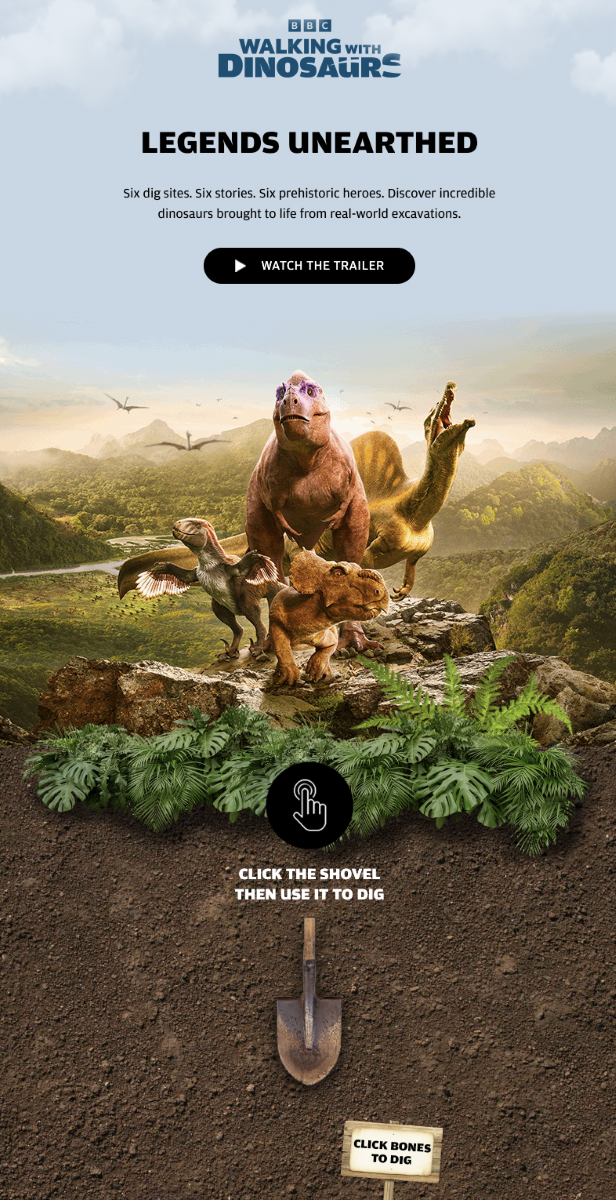
- Add rules and keep them simple: Don’t forget to equip your email game with clear rules so players can understand how to beat it. They should grasp what to do and what they’ll get within seconds. Opt for a clear set of rules and a satisfying reward instead of overcomplicated multi-step mechanics.
(Source: Email Love)
- Avoid trick mechanics that erode trust: overly restrictive terms, fake-win wheels, or unclear odds are the fastest way to damage your brand reputation and lose loyal subscribers. Make rewards real, achievable, and easy to redeem. As a result, it’s a win-win situation: You create micro-dopamine loops for your subscribers, and they keep interacting with your future emails.
- Match the game to the goal: Choose the game type based on your goal. For example, if a cosmetics brand wants to re-engage subscribers, add a simple “Guess the scent” scratch card to an email to boost interaction before showing product recommendations.
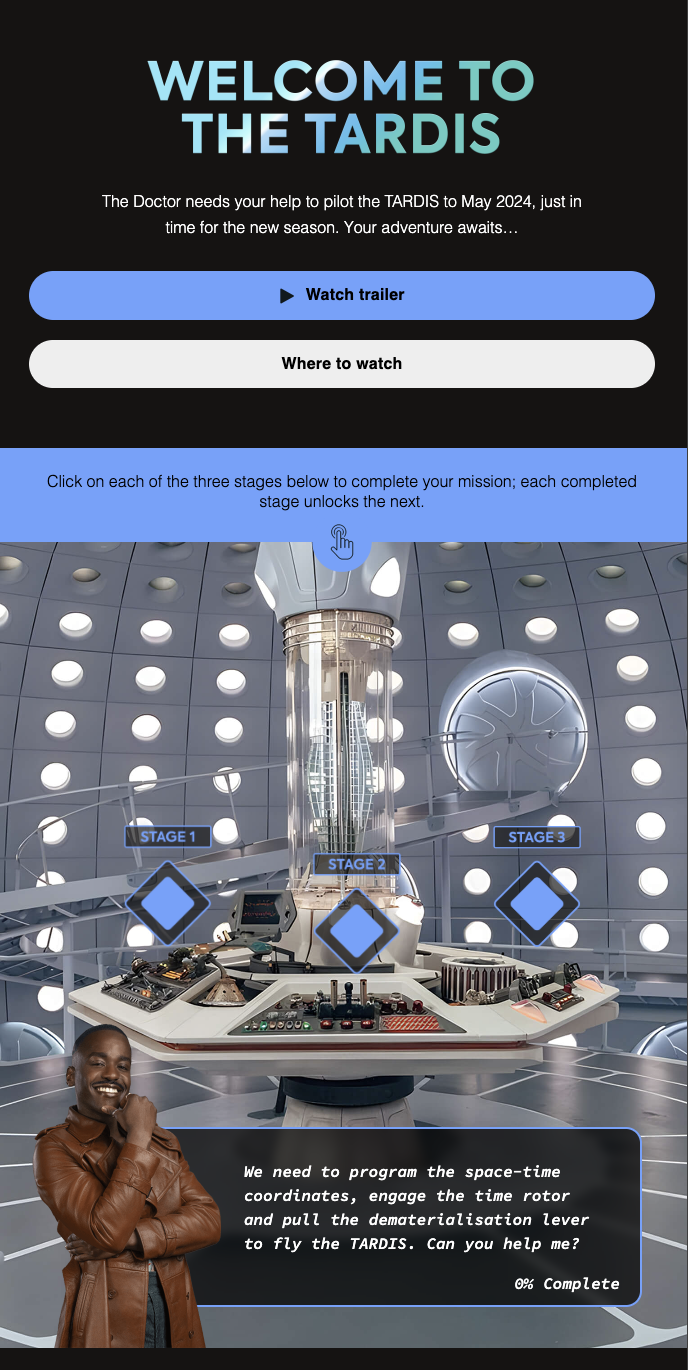
If you run a clothing store and want to segment recipients by preferences, send a 2-question quiz (e.g., “What’s your winter style?”). And if you own an electronics brand and aim to boost conversions, send an email with a spin-to-win wheel during Black Friday to drive traffic to the website. Remember that after every subscriber’s action, the game must display the intermediate result (e.g., feedback or a progress bar).
In the example below, you can see a gamified email from the BBC tied to the release of a new season of Doctor Who.
(Source: Email from the BBC)
- Use data ethically: If your quiz collects preference data, be transparent about how you’ll use it. Ethical data handling strengthens long-term loyalty.
- Pay attention to timing: Games perform best when connected to something meaningful, such as holidays, product launches, seasonal drops, or special events. For example, a travel agency can surprise recipients with a “Scratch to reveal your summer destination deal” card at the start of the vacation season, or a bookstore can send a “Spin for your next read” wheel right before Book Lovers Day on August 9.
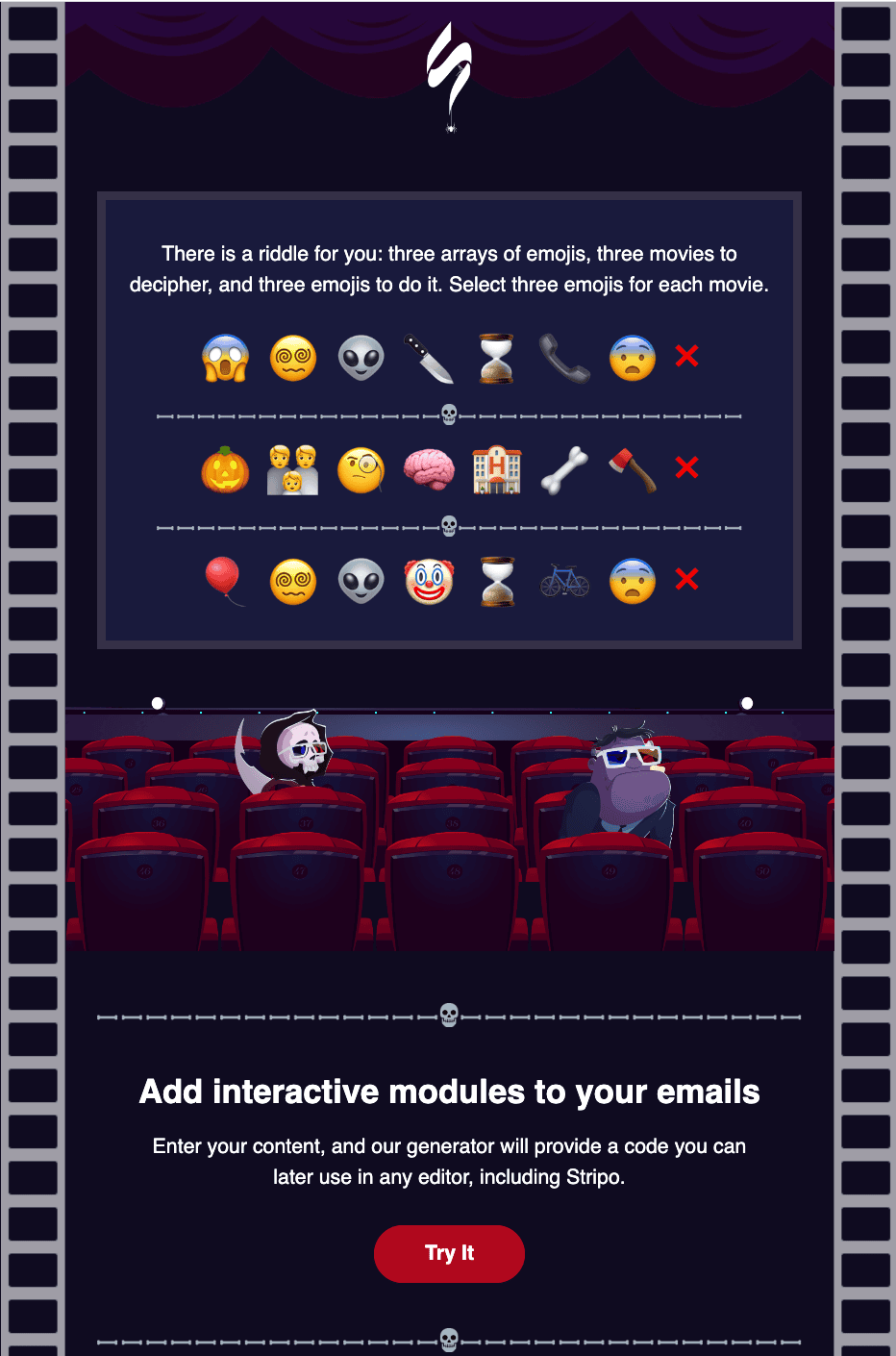
(Source: Email from Stripo)
Common Mistakes to Avoid While Making Games for Emails
Even the most beautifully designed email game won’t reap maximum results if you make some of the most common mistakes.
Here are pitfalls to avoid when creating games for your email campaigns:
- Overstuffing the game with too many complex steps. If subscribers must click multiple times to complete a single action, read long instructions before actually starting to play, or solve overcomplicated tasks, they’ll drop off. Your games will work best when they deliver instant clarity and quick wins.
- Using games where the email content doesn’t need them. Yes, gamified emails can significantly enhance engagement, but they should still support your main message instead of distracting a reader from it, so don’t add games to emails just because you can do it. For example, when you want to share updates on a delivery status, transaction, or crucial information, games in the email will just feel off.
- Giving rewards that feel irrelevant or disappointing. Besides the game itself, it’s important to pay attention to the quality of rewards, as they also affect engagement. Imagine putting effort into beating a game, waiting for your reward, and finally receiving a scratch card with a prize that requires a minimum $200 spend, or a generic PDF guide unrelated to the recipient’s answers after taking a detailed quiz about their preferences.
Email gamification is much more than adding flashy elements and fancy decorations to newsletters. It’s about providing recipients with a memorable experience and creating simple yet meaningful interactions that guide your subscribers from attention to interaction and conversion. When your email game is easy to grasp and navigate, has clear rules, offers satisfying rewards, and is aligned with your campaign goal, it becomes a powerful tool for engagement.
