


Our Content Playbook: The Secret Sauce We’re Handing Over

Key takeaways
- Content’s job is to make somebody else’s job easier. Sales, support, marketing, the customer reading it.
- The best topic ideas come from sales conversations, support tickets, product gaps, and industry shifts. Not from spreadsheets.
- We use Claude and AirOps to move faster, but every output gets edited by a human before it goes live.
- Updating existing posts usually beats writing new ones — especially for evergreen topics that already rank.
- Distribution matters as much as the writing. Publishing is the middle of the process, not the end.
Most companies treat their content process like a trade secret. We’re going to do the opposite.
I’ve been running content at Benchmark Email for six years, and the playbook I’m about to walk you through is the same one I use every week. It’s what turns a vague “we need a blog post on X” into something that ranks, converts, and actually helps the team. It’s the methodology behind every resource we’ve published.
I’m sharing it because more marketers should be sharing this kind of thing openly. The “how” of good content isn’t proprietary magic. It’s a set of choices, most of them learnable, and the more of us who talk about them out loud, the better the work gets across the board. If you’re a marketer trying to figure out your own workflow, steal whatever’s useful. If you’re a Benchmark customer, this is what’s happening behind every guide and blog post we send your way.
Here’s the whole thing.
Step zero: content has a job to do
Before any of the workflow stuff, here’s the mindset I work from: content’s job is to make somebody else’s job easier.
If our content is doing what it should, it helps the sales team close deals faster. It answers a prospect’s question before they have to ask it twice. It teaches a customer how to use a feature without them having to file a support ticket. It builds trust without anyone having to manually establish it in a conversation.
Teach first, sell second. That’s the whole game. Our best customers are always our most educated ones, so the more we can do up front to help people understand email marketing (and our piece of it), the better everything downstream gets.
Where ideas actually come from
A lot of content calendars are built in a vacuum. Somebody opens a spreadsheet, types in 12 topic ideas that sounded good in their head, and calls it a quarter.
Mine doesn’t work like that. The best topics come from four places:
- Sales conversations. What are prospects asking on demos and intros? What questions keep coming up? If three different sales reps mention the same question this month, that’s a blog post waiting to happen.
- Product gaps and market confusion. Deliverability is my favorite example. Every time we publish on it or run a webinar about it, the numbers are strong, because deliverability is genuinely confusing, our audience is busy, and they don’t have time to untangle the technical side themselves. That’s a gap we can fill.
- Support tickets. The support team is in conversations I’m not in, and they’re seeing the same friction points repeatedly. Those friction points belong on the blog, not just in the knowledge base. (The knowledge base talks to existing customers. The blog talks to people who might become customers, and educated prospects make for happier customers later.)
- Industry shifts. Marketing changes overnight. If a major competitor raises prices or a new tool launches, we want to be in that conversation as people search for it.
The AI part: yes, we use it, here’s how
I’ll be upfront: AI is part of my workflow. Pretending it isn’t would be silly, and I think most marketers reading this are doing some version of the same thing.
Two tools are doing the heavy lifting for me right now:
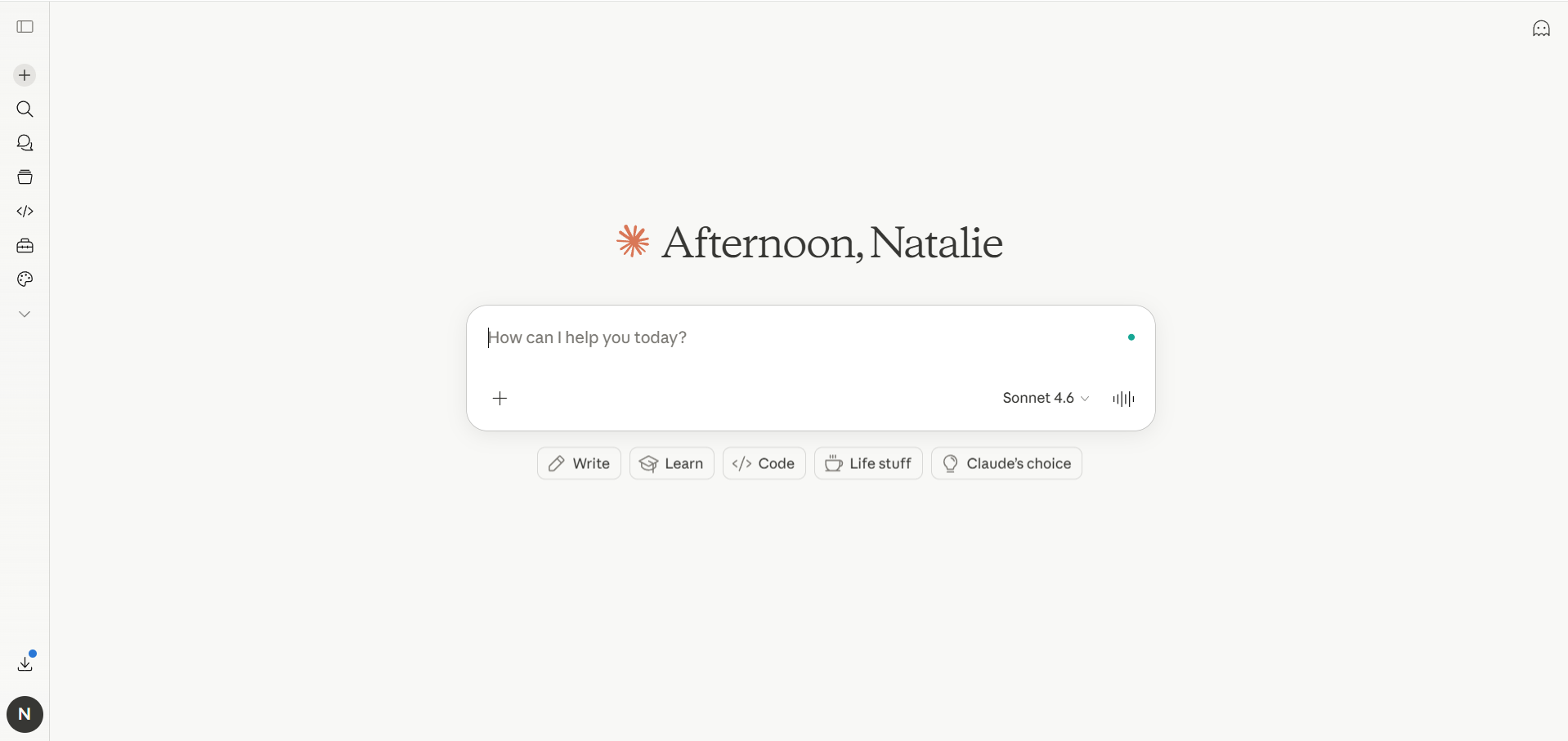
Claude for framing, ideation, and getting unstuck. When I have a topic, but the angle isn’t landing, Claude is great for pressure-testing it. I used to use ChatGPT here; I switched to Claude this year and haven’t looked back.

AirOps for content gap analysis and refresh recommendations. Two views I use constantly: a “content gaps” folder that surfaces topics we haven’t covered yet (sometimes it suggests things we have covered, which is honestly a useful sanity check), and an “almost page one” view that shows me posts ranking on page two of Google. Those are the posts where a thoughtful refresh can move the needle in a way that publishing something brand new can’t.
Here’s the catch, and it’s the part most “we use AI for content” stories skip: every output gets edited by a human. Me, specifically. AI will confidently insert a statistic it pulled from somewhere and forget to cite it. It will use a phrase that isn’t how we “talk.” It will pad a section that should be three sentences. My job is to catch all of that, cite anything that needs citing, and make sure what we publish sounds like Benchmark and not like a template.
Update over reinvent
This is probably the most important strategic shift in how I think about content this year.
If we have a blog post on email segmentation that’s been live for three years and is accumulating traffic, the worst thing I can do is publish a brand-new post on the same topic. All that does is split the SEO juice and confuse Google about which page to rank.
So instead of constantly writing new posts on evergreen topics, I’m spending a lot of my time updating the ones that already exist:
- Refreshing stats
- Tightening the writing
- Adding new sections
- Making them rank better in AI search results (which is increasingly where people are going for answers, not just Google).
New posts still happen, of course, for product launches, timely industry stuff, and things we genuinely haven’t covered. But the default move is to refresh, not to rewrite from scratch.
Formatting for the way people actually read
Attention spans are not what they used to be. I’m not mad about it. It’s just the reality, and the content has to meet people where they are.
A few things I do on every post now:
- A list of key takeaways at the top
- An FAQ section at the bottom
- Strong scannable headings throughout
- Enough white space that the page doesn’t feel like a wall
The goal is for someone with 90 seconds to still walk away with the main idea, and for someone who wants the full read to be rewarded for sticking around.
I also add in-text CTAs that link to gated resources, such as guides and webinars, that people can actually take with them. Each CTA feels like part of the reading experience rather than a banner ad.
Publish isn’t the last step
This is the part I want every marketer to take away: publishing is not the finish line. Distribution is.
A blog post that goes live and then sits there isn’t doing its job. There are various ways to ensure you’re distributing it effectively:
- Share it on social
- Pull it into automated campaigns where it makes sense
- Give it to the sales team to use in their conversations as a follow-up
- Use it as a re-engagement excuse
- Use it to actually answer a question
- Hand it to support, to HR, or to anyone at Benchmark who might find it useful
Content becomes a team asset the moment it’s published. The job from there is making sure the team uses it.
Frequently asked questions
How often do you publish new content vs. update existing content?
The split shifts month to month, but most of my time goes into updating. For every brand-new post we publish, I’m usually refreshing two or three existing ones. The math is simple: a three-year-old post that’s already ranking is a bigger lever than a brand-new post starting from zero.
Do you really use AI to write blog posts?
We use AI in the workflow, but not in the way many people assume. Claude helps me with framing, outlining, and pressure-testing angles. AirOps surfaces gaps and refresh opportunities. None of it gets published without a human editor (me) going through it line by line for voice, accuracy, citations, and anything else that needs fixing. Skip the editor, and AI becomes a liability.
How do you decide whether a topic is worth covering?
Three filters. Does it answer a question we’re actually hearing from prospects, customers, or support? Is there a search demand we can realistically rank for? And does it map to something Benchmark genuinely helps with? If a topic clears all three, it goes on the list. If it only clears one, it usually doesn’t.
What’s the biggest mistake you see other content teams making?
Treating publishing as the finish line. A post that goes live without a distribution plan is just a file sitting on a server. We share every post on social, work it into drip campaigns where it fits, and hand it to the sales and support teams to use in real conversations. That last part is where most of the value actually shows up.
How long does a single blog post take from idea to publishing?
It varies a lot. A timely post tied to an industry shift can move from idea to live in a couple of days. A pillar piece (something foundational, longer, with research behind it) can take a few weeks to produce. Refreshes are usually the fastest because the structure is already in place.
Can I steal this process?
Please do. The whole point of writing this down was to share it. The tools are swappable, the principles aren’t. Start with where the questions are coming from, edit everything a human touches, update before you reinvent, and treat distribution as part of the job. That’s most of it.
About the Author:

Content Marketing Manager | Content marketing, inbound funnel, social media, email nurture | Natalie Slyman is an experienced Content Marketing Manager at Benchmark Email with a strong B2B background and a knack for crafting pillar content that boosts SEO and brand authority. She regularly shares actionable insights—from remote-work strategies to AI-powered content workflows—via blog posts and webinars tailored for busy marketers.