


Key Takeaways
- Product updates remind contacts you’re growing: Feature announcements show your brand’s value and ongoing improvements, even to people who haven’t bought yet.
- Personalization drives conversions: Recommendations based on past purchase behavior speak directly to what each subscriber already wants.
- A one-time discount lowers the barrier: Offering a small incentive gives inactive contacts a reason to come back.
- Value-first content rebuilds trust: Sharing something genuinely useful, without a sales pitch, keeps your brand top of mind.
- A friendly tone humanizes your brand: Writing like a friend, not a stuffy stranger, makes people more likely to engage.
- Inaction has a cost: Letting inactive contacts pile up hurts your deliverability and sender reputation, not just your open rates.
Your contact list is one of your greatest assets. It’s full of people who have actively handed over their email addresses. They want you to get in touch with them.
But if you don’t nurture your list, you might find your subscribers become less and less engaged over time. That doesn’t mean you’ve lost them completely. There are tactics you can put in place to re-engage them and make your list a lively place again.
We’ve rounded up five re-engagement emails that actually work. No complicated playbook required. Just straightforward tactics to remind subscribers why they signed up and get them clicking again.
1. Send product updates
Some subscribers will have bought something from you; others won’t have. That doesn’t mean the latter group won’t be interested in product updates.
Emails that outline how you’re improving your products and services show you’re working hard to create the best possible offer. It shows you’re actually listening to your subscribers and putting their feedback to work.
Product update emails also act as a reminder about your brand. If you haven’t shown up in someone’s inbox in a while, this will jog their memory and reignite their interest in your products.
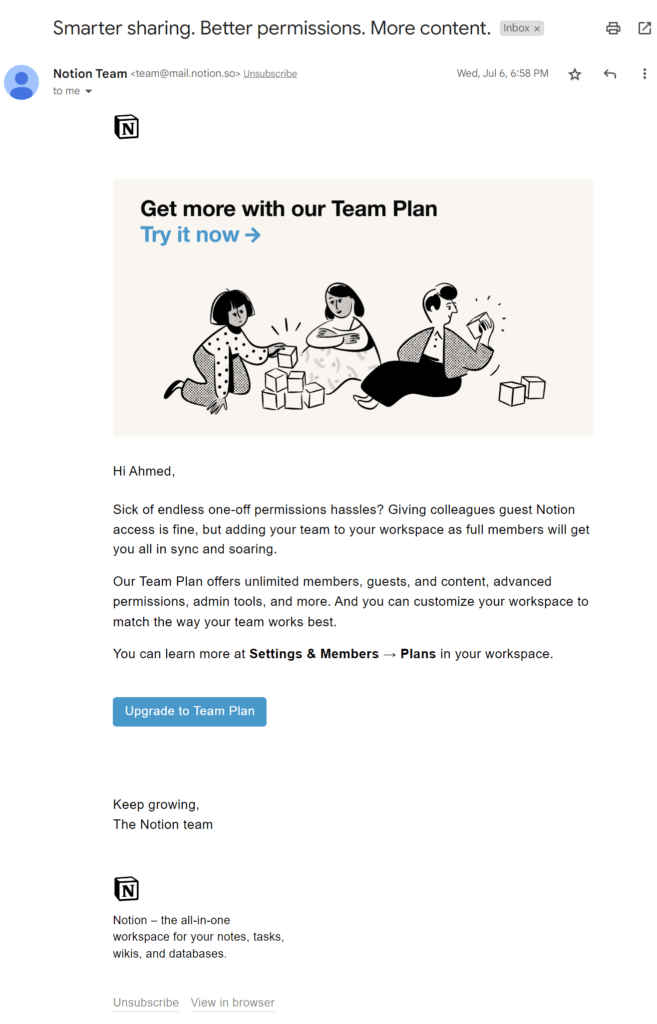
A solid example of this in action: Notion regularly sends subscribers short, visual emails introducing new features, such as AI-powered search or new database views, each paired with a single CTA to try the feature. Someone who already uses the product might click through to explore it, while a subscriber who hasn’t yet committed might decide this is the update that tips them over the edge.
2. Share personalized recommendations
Here’s the thing: personalization doesn’t have to mean knowing someone’s birthday and their dog’s name. The most effective (and privacy-friendly) way to re-engage subscribers is to serve up product recommendations based on what they’ve already bought or browsed.
For example, if it’s been six months since someone purchased from you, nudge them to buy again by sharing a relevant product based on their last purchase. Sending recommendations based on past purchases deepens your connection with subscribers and drives more conversions, because you’re speaking directly to what each person already wants.
Spotify’s “On Repeat” and “Time Capsule” playlists are a great example of this idea outside of retail. They’re built entirely from a listener’s own behavior, which is exactly why people open them. Apply the same logic to your contact list: a “Picked for You” email built from someone’s past purchases or clicks tends to outperform a generic newsletter.


3. Offer a discount
People love discounts. Who doesn’t want money off? Giving existing subscribers the chance to claim a discount on their next purchase spurs them into action. This increases their engagement and strengthens their relationship with your brand.
You don’t have to do it every time, but even a one-time discount can remind subscribers why they signed up in the first place and bring them back for more. In turn, they’ll remember you when you show up in their inbox again, and they’ll be more likely to open and engage with future emails.
4. Share valuable content
Re-engagement emails don’t need to be about the sale. The goal is to reconnect with people who might have become a bit distant; maybe they no longer open your emails, or they stopped clicking through when they did.
A great way to start a re-engagement campaign is to share content your subscribers will genuinely enjoy. You’ve probably experienced this yourself. An email lands, the content sounds too good to ignore, and suddenly you’re clicking through before you’ve even thought about it.
The content you link to doesn’t have to be elaborate. A well-written blog post, a helpful how-to, or even a roundup you’ve already published works great. The goal is to give subscribers a reason to click, not a reason to unsubscribe.
5. Use humor and keep it friendly
People seek out connections with the brands they buy from. They’re far more likely to engage with a brand that feels like a friend than a cold, stuffy stranger, so write like one. (Not just in re-engagement emails. In every email you send.)
Don’t be afraid to inject a little humor. It can be the thing that makes someone smile mid-scroll and actually open your email. But most importantly, write your emails as if you were speaking to a friend, not as if you just want money from someone. Humor and friendliness go a long way in reconnecting with subscribers who might have forgotten about you. Or, at the very least, forgotten why they signed up for your emails in the first place.
Duolingo’s social and email presence is a good modern reference point here: the brand leans hard into a playful, slightly absurd personality, and it’s a big part of why people pay attention to a language app’s marketing at all. You don’t need to go that far, but the underlying idea. Sound like a person, not a press release. This applies to any brand.
Why inactive contacts are a deliverability problem, not just a missed opportunity
Re-engagement isn’t only about winning back a sale. The contacts who never open your emails also affect whether your emails reach anyone else’s inbox.
Inbox providers like Gmail and Outlook track engagement at the sending-domain level. When a large share of your sends go to people who never open, click, or even look at your emails, that’s a signal to inbox providers that your mail might not be wanted, and it can push future campaigns, including the ones your engaged contacts actually want, into spam folders.
A focused re-engagement campaign gives inactive contacts one clear, final chance to opt back in. From there:
- Anyone who opens, clicks, or replies moves back into your regular sending list.
- Anyone who doesn’t engage after a re-engagement series should be added to a suppression list or removed entirely.
Unengaged subscribers aren’t a lost cause
Unengaged subscribers aren’t a lost cause; they’re an opportunity. Life gets busy, inboxes get noisy, and sometimes your brand just gets lost in the shuffle. A well-timed, friendly re-engagement email can change that. And with Benchmark Email, setting one up takes minutes, not hours. Ready to win back your list? Start your free trial today.

Sign up for a free Benchmark Email account today!
SIGN UP FREEFrequently Asked Questions
What is a re-engagement email?
A re-engagement email is a message, or short series of messages, you send to contacts who haven’t opened or clicked in a while. It reminds them why they signed up, shares fresh value, and invites them to stay on your list.
How do I spot inactive subscribers in my list?
In Benchmark Email, open your email reports and filter contacts by their last open or click date. Then segment anyone who hasn’t engaged for 60–90 days so you can send them a dedicated re-engagement campaign.
How many emails should be in a re-engagement series?
Two to four emails, spread over roughly two weeks, work well. This rhythm keeps your brand top of mind without flooding the inbox.
What should I do if a subscriber still doesn’t engage?
If someone ignores every email in your re-engagement series, move them to a suppression list or delete them. Clearing inactive contacts protects your deliverability and keeps your email reports accurate.
Can I add someone back to my list after they unsubscribed?
No. Email regulations require fresh consent. Ask them to sign up again through your sign-up form before you send any new campaigns.
About the Author:

Content Marketing Manager | Content marketing, inbound funnel, social media, email nurture | Natalie Slyman is an experienced Content Marketing Manager at Benchmark Email with a strong B2B background and a knack for crafting pillar content that boosts SEO and brand authority. She regularly shares actionable insights—from remote-work strategies to AI-powered content workflows—via blog posts and webinars tailored for busy marketers.