


From One Video to Many: Smart Strategies to Repurpose Video Content Like a Pro

You already know that video is the most powerful way to connect with customers. It’s more than just content—it’s a storytelling machine that can build trust, spark emotion, and drive action in ways static images never could.
But here’s the real challenge: How do you create enough high-quality video content to guide potential customers through the entire buyer’s journey—from awareness to conversion—without burning out your team or your budget?
The answer isn’t making more videos, it’s making your videos work harder.
Video Marketing is Exploding (and the Numbers Prove It)
Right now, video is everywhere, and it’s winning.
- 92% of internet users engage with video content regularly.
- Viewers consumed 1.5 billion minutes of video via mobile and TV apps in late 2024 — nearly double the 871 million minutes on web.
- 84% of marketers say video has directly increased their sales.
- 93% of brands say video has helped them increase brand awareness.
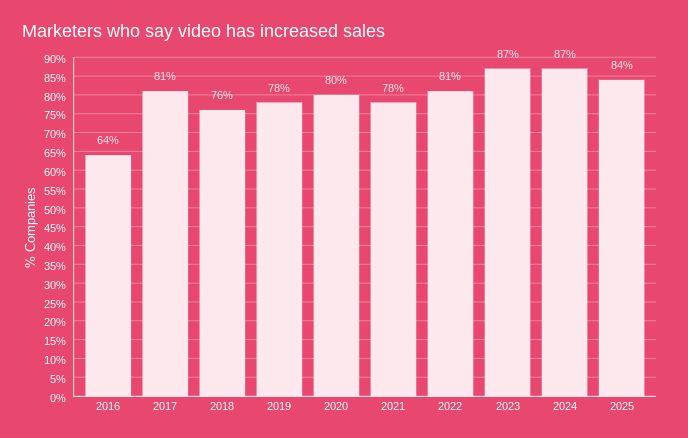
Source: Wyzowl
That’s significant.
But if you’re only using video once and moving on to the next, you’re leaving a massive opportunity on the table.
In this guide, you’ll learn how to repurpose your existing video content so that it works smarter, not harder.
More importantly, you’ll discover how to tap into one of the most powerful (and overlooked) secrets in marketing. And when you truly understand what this secret is, it will be hard not to create truly engaging and compelling videos that drive results.
When you align your video content with what your audience needs at each stage, you create a seamless path from interest to purchase. More engagement. More conversions. More impact.
It’s time to stop chasing endless content creation and start unlocking the full potential of every video you make. Let’s dive into the foundation of great content marketing: the buyer’s awareness journey.

Understanding the Buyer’s Awareness Journey
In 1966, Eugene Schwartz, a legendary copywriter, authored one of the most influential books on advertising. In Breakthrough Advertising, Schwartz introduced the concept of the Five Stages of Buyer Awareness.
This book is so good, here’s what people say about it:

Schwartz’s framework was revolutionary yet straightforward: not all buyers are ready to purchase immediately. Instead, they progress through different stages of awareness. They move from not knowing they have a problem to actively seeking and purchasing a solution.
Most marketing campaigns fail because they target the wrong audience at the wrong stage of awareness.
Too many brands jump straight into selling, assuming their audience is solution-aware when, in reality, most people are still trying to understand their problem.
This is where Schwartz’s Buyer Awareness Journey becomes a secret weapon for content marketers. Tailoring content to match where your prospect is mentally and emotionally, you can:
- Capture a larger audience by addressing their pain points first.
- Nurture prospects more effectively by guiding them step-by-step toward a solution.
- Convert more customers by delivering the right message at the right time.
Think of it as meeting potential customers where they are, rather than trying to force a sales conversation too soon.
Here are the Five Stages of Buyer Awareness:
- Unaware: The prospect is not aware they have a problem or need.
- Problem-Aware: The prospect realizes they have a problem but is unaware of solutions.
- Solution-Aware: The prospect is aware that solutions exist, but is not aware of your specific product or service.
- Product-Aware: The prospect is aware of your product but hasn’t yet determined if it’s the right fit for them.
- Most Aware: The prospect is familiar with your product and is almost ready to make a purchase, but may require a final nudge.
Why Problem-Aware Customers Present More Opportunities
Have you ever noticed how the typical marketing funnel is illustrated? Large, open top with a body that shrinks the closer your customers get to purchasing a product? That’s because it represents what any market looks like. All markets are filled with people who start not knowing they have a problem and end up purchasing a product.
This is what makes problem-aware customers so valuable. Because they are aware of a pressing problem, you’ll have an easier time moving them to the purchase stage.

Key Takeaway: Most businesses target solution-aware buyers, but the most significant untapped opportunity is problem-aware audiences.
Why Evergreen Content Is The Secret to Staying in Front of Problem-Aware Prospects
When someone realizes they have a problem, where’s the first place they go?
They search. They turn to Google, YouTube, social media, podcasts, blogs, and any other source they can find to help them understand their pain points.
That’s an incredible opportunity for you.
When you repurpose your video content strategically, breaking it into bite-sized pieces that live across multiple platforms, you’re not just increasing your reach. You’re placing your brand exactly where problem-aware customers are already looking.
The key to making this work? Evergreen content.
Evergreen Content = Long-Term Visibility and Compounding Value
Not all content is created equal. Some posts fade fast (like trend-based videos), but evergreen content compounds in value over time. But when you come across evergreen content, you’ll notice that it:
- Ranks on search engines, so new problem-aware prospects find it constantly.
- Can be shared across multiple platforms, multiplying brand exposure.
- Works year-round, consistently generating new leads with minimal effort.
The more places your content appears, the more chances you have to become the trusted go-to source when prospects are searching for answers.
Let’s say you create a long-form video titled “Why Small Businesses Struggle with Cash Flow (And How to Fix It).”
Instead of just posting it to YouTube and hoping for views, you:
- Break it into short clips for Instagram, TikTok, and LinkedIn.
- Turn the insights into a blog post that ranks on Google.
- Repurpose the transcript into a Twitter/X thread.
- Extract the key ideas for an email newsletter.
Same core message. Different angles. Multiple touchpoints. Maximum impact.
Why Evergreen Content Must Solve a Timeless Problem
Here’s the golden rule: Evergreen content only works if it addresses a problem your audience consistently struggles with.
Here’s a bad example: “Marketing Trends for 2024” (This expires the moment the year ends.)
A great example: “Why Most Businesses Waste 20% of Their Marketing Budget” (This is always relevant.)
To produce your most timeless evergreen content, you MUST think about your audience’s journey. What pain points do they consistently run into?
How to Identify Buyer Problems
There’s a good chance that you’ve created persona documents and know what your target audience needs. But on the off chance that you’re a little uncertain, here’s how to figure out what problems buyers solve:
Search for questions.
Key identifiers include the words “how” and “why,” which are easiest to find. But there are other ways buyers seek solutions.
Your audience uses these terms to find solutions to problems. Your goal is to create repurposed content that offers solutions.
By reframing the same core problem in multiple ways, you:
- Strengthen your brand authority (you’re everywhere with insightful content).
- Engage problem-aware customers at different stages of their journey.
- Continue to reinforce your message without sounding repetitive.
If your audience struggles with customer retention, you might create a video, such as:
- A YouTube video: “Why Customers Leave (And How to Make Them Stay).”
- A LinkedIn Post: “3 Mistakes That Make Customers Disengage.”
- A Short Video for Social: “The #1 Reason Your Customers Don’t Come Back.”
- A Blog Post: “How to Build Customer Loyalty Without Discounts.”
- An Email Newsletter: “Fix These Retention Mistakes Before It Costs You More Sales.”
Once again, the same problem, new perspectives. And, most importantly, more chances to connect with your audience and guide them toward a solution.
Key takeaway: Identify timeless problems that you can rephrase.
How to Repurpose Video Content for the Problem Awareness Stage
Now that we understand the buyer’s awareness journey and how essential evergreen content is to attract more buyers, let’s break down how to bring both concepts together to create effective repurposed videos that support your funnel.
Start with a High-Value “Pillar” Video
The key to repurposing content is to begin with a high-value pillar video. This is a long-form video that delves into a topic in-depth, offering substantial insights.
It serves as the foundation from which you can extract and refine content into shorter, more targeted pieces.
Don’t Overlook the Power of Music
A detail many creators miss when producing evergreen video content is the background music. The right soundtrack adds emotion, builds trust, and enhances retention, especially in long-form videos. Consider platforms that offer high-quality, royalty-free music without the hassle of copyright headaches.
How to Identify a High-Value Pillar Video
At first, it may be challenging to determine what a strong pillar video looks like. The truth is, they come in different formats. However, once you understand the key elements of a great pillar video, you’ll start to notice them everywhere.
Effective pillar videos are:
- Comprehensive and Educational: The video should provide deep insights, valuable information, or expert perspectives that problem-aware buyers are actively seeking.
- Structured with Clear Sections: They naturally break into distinct segments, making it easier to extract clips that address specific pain points.
- Evergreen Potential: A video that remains relevant over time ensures that repurposed content has a longer lifespan.
Bonus: They have high engagement metrics. This element is more of a nice-to-have than a requirement. Engagement metrics, while telling, aren’t always a good indicator of a video’s success.
You can have a great webinar that hasn’t received the kind of promotion it needs and doesn’t get the engagement that proves it a winner. That doesn’t make it a bad candidate for a pillar video.
Ideal Types of Pillar Videos for Problem-Aware Buyers
The best types of pillar videos are typically:
- Webinars – These often contain detailed discussions, expert insights, and audience questions, making them rich sources of content. Hosting a free web conference as a webinar allows for broad participation and can significantly increase engagement and value for viewers.
- Long-Form Explainer Videos – Particularly those that address industry challenges, solutions, or processes clearly and engagingly.
- Tutorials & How-To Guides – Step-by-step instructional content that problem-aware buyers seek when looking for solutions.
- Product Demos – Showcasing the value of a product in action, helping potential buyers understand its benefits.
- Live Q&A Sessions – These can be goldmines for repurposing, as they contain real customer pain points and responses from industry experts.
Pro Tip:
When selecting a pillar video, focus on content that solves a specific problem.
Key takeaway: Collect and review all long-form videos you have and use this three-point checklist to find the pillar videos.
Structuring Repurposed Content for Different Formats & Platforms
Now that we’ve identified a strong long-form video and broken it down into smaller, more impactful pieces, the next step is to structure this content for different platforms. The key here is to tailor the content format to match the strengths of each platform while maintaining the same core message.
Types of Repurposed Content:
- Blog Post Format – Transform the video insights into a detailed, SEO-optimized article. Expand on key points, include relevant data, and structure it for readability.
- Email Format – Craft a storytelling-driven email that highlights a core problem and solution from the video, embedding a snippet to drive engagement.
- Short-Form Video Format – Extract snippets to create Reels, TikToks, LinkedIn native videos, and YouTube Shorts. These should be engaging, concise, and optimized for mobile viewing.
- Social Image Format – Create bold-text quote graphics or infographics highlighting key insights. These work well on Instagram, LinkedIn, and Pinterest.
- Carousel Posts – Use LinkedIn and Instagram carousels to break down complex problems step by step, making the content more digestible and interactive.
- Tweet Storms & Threads – Turn key insights into a Twitter thread that encourages discussion and engagement.
A Repurposing Example
Let’s say we have a long-form webinar discussing how small businesses struggle with late payments, leading to cash flow problems and wasted time manually tracking payments. As a SaaS accounting software provider, here’s how we could repurpose that content:
- Short-Form Video: “How Late Payments Are Killing Your Cash Flow & What to Do About It” – A 60-second video clip.
- LinkedIn Post: “Three Ways to Stop Late Payments from Hurting Your Business” – A professional thought leadership post.
- Email Campaign: “Are Late Payments Draining Your Business? Here’s the Fix” – A compelling email linking to a solution-focused landing page.
- Blog Post: “How to Stop Late Payments from Crippling Your Business” – An in-depth guide on preventing late payments.

Adapting content to different formats helps you maximize reach and impact. It also addresses the needs of problem-aware buyers directly: providing valuable insights in a format they prefer.
Repurposing video content for different platforms can be a demanding task, but you can simplify the process by outsourcing video editing to professionals.
How Freshpaint Repurposed a Webinar
Privacy is a big deal in every industry. In the medical field, most organizations struggle to understand the value of analytics, particularly when trying to balance the need for privacy.
Freshpaint’s Unlocking Privacy-First Analytics in Healthcare Marketing webinar was designed to address this problem. It provides medical organizations with critical insights on striking the right balance between ensuring privacy and gathering key data for marketing projects.

Recognizing the complexity of this problem, Freshpaint leveraged its webinar.

Freshpaint took repurposing a step further and produced a short video on LinkedIn.

How Matt Gray Turned a YouTube Video into Several Social Posts
Matt Gray has built a sizable business empire all on the back of content. In this example, he uses a single YouTube video to demonstrate how he has built a following of 1.8 million across social media platforms.
This is a problem other founders and aspiring entrepreneurs want to solve.

Gray then repurposes this video into various forms of content, spreading it across different platforms.
On Twitter:
If you want to make $1 Million+ with a coaching business, read this: pic.twitter.com/W7fhVSRsdI
— MATT GRAY (@matt_gray_) June 23, 2024
On Facebook:

On LinkedIn:
On Instagram:

Key takeaway: Use your long-form video and identify the key problem(s) it addresses. Use your rephrased problems for inspiration.
How to Use AI & Automation to Streamline Repurposing (While Staying Problem-Focused)
AI-powered tools can drastically streamline the process (and save precious hours) of repurposing content.
Instead of manually combing through long videos, AI can:
- Automatically Transcribe & Summarize: AI tools can generate transcripts from long-form videos, which can then be repurposed into blog posts, emails, and social media content.
- Select Clips & Highlight Extraction: AI can identify the most engaging moments from a video and suggest optimal clips for short-form content.
- Automate Content Distribution: AI can schedule and post repurposed content across multiple platforms, optimizing formats for each channel to maximize engagement.
- Reframe your customer problems: AI can produce hundreds of engaging hooks and ideas for reframing customer problems.
There’s no shortage of AI tools that can perform these feats, so to help, here are three worth considering:
Description: Helps transcribe videos, extract key sections, and generate short-form clips effortlessly.
Repurpose.io: Automates the process of distributing problem-solving short-form video content across platforms.
Opus Clip: Uses AI to identify and extract the most engaging moments from long-form videos for repurposed clips.
Key takeaway: Use AI tools to extract content from long-form videos and produce ideas that reframe your customers’ problems.
How to Extend Your Repurposed Content Lifespan and Boost Its Discoverability
You’ve put in the effort to repurpose your content, but it won’t work as hard for you as it should unless it’s structured correctly for long-term visibility.
By optimizing your repurposed content for discoverability and longevity, you create multiple evergreen assets that continue to generate value for your business over time.
Tips to Extend Content Lifespan and Improve Discoverability:
- Optimize for SEO: Use problem-based keywords in titles, descriptions, and transcripts to ensure search engines surface your content for relevant queries.
- Cross-Promote Content: Link short-form content back to in-depth educational videos and blog posts to create a continuous engagement loop.
- Leverage User-Generated Content: Encourage audience engagement through reactions, responses, and testimonials on social media platforms to increase reach and credibility.
Freshpaint used a LinkedIn video to direct traffic to its webinar by adding a comment with a link to enroll for the webinar.

Summary: How to Implement This Strategy Today
Building your collection of repurposed content may seem like a slog, so here’s a summary of all six steps:
Step 1: Choose a pillar video that educates problem-aware prospects.
Step 2: Reframe the problem from different angles to reinforce the messaging. Use the copy to reframe the idea, keeping its core message intact.
Step 3: Repurpose it into multiple evergreen content formats using a tool like Descript. If you’re exploring other options, check out these Descript alternatives that offer similar or enhanced features.
Step 4: Utilize AI to streamline the repurposing process, enabling content to be pushed to various platforms with distinct format requirements.
Step 5: Diversify with image posts, blog posts, and emails.
Step 6: Optimize for visibility & discoverability.
Smart Businesses Solve Problems
Businesses that strategically repurpose problem-awareness content generate more leads, build trust, and establish long-term authority in their industry.
Repurposing content isn’t difficult if you follow these steps, but first, aim to understand what problems your audience is facing. Then figure out how you can address these problems using long-form video content and the tools and tips you’ve just discovered.


A powerfully simple email marketing platform
Sign up for free to see how effortless email marketing can be.
Our Company
Compare
Solutions
Compare
Account
© Polaris Software, LLC Benchmark Email® is a registered trademark of Polaris Software, LLC
© Polaris Software, LLC
Benchmark Email® is a registered trademark of Polaris Software, LLC