


The 30-Minute Weekly Marketing Audit: How to Stay on Top with Minimal Time

How often is a first attempt, thought, or assumption correct? Marketing is a diverse field full of competing priorities, and the world moves too quickly to sit around second-guessing every decision, looking for potential opportunity costs.
The vast majority of marketing campaigns, between 70% to 85% depending on the country and industry, fail to generate any meaningful return on investment. The reasons for this are complex, ranging from poor positioning and channel choice to lofty expectations placed on small teams with minuscule budgets. In any case, decisions were made, carried out with single-minded determination, and ended in ruin, leaving leaders to ask themselves, “Did it have to be this way?”
The answer is “no”. Shortcomings are a natural part of any campaign when environments are governed by changing algorithms and audience expectations. Marketing is a field where even a correct first assumption can quickly become redundant, but the good news is that this volatility is measurable. Leaders who conduct regular marketing audits can adapt dynamically to change, steering campaigns with both hands firmly on the wheel.
Why a weekly audit matters
Traditionally, audits are usually reserved for end-of-quarter reviews or massive, break-glass-in-case-of-emergency overhauls. These still have their place, but weekly audits act more like a quick health check to ensure your strategy and execution remain aligned, removing the need for those late panic-induced scrambles when everything has gone dreadfully wrong.
Here is why consistent 30-minute reviews make such a difference:
- Market conditions change fast. Algorithms, platform policies, and audience interests can change overnight, and you know your competitors are constantly trying out new formats and platforms. Weekly audits help you catch these micro-trends early, so your messaging stays relevant.
- It catches minor issues early. If your engagement declines, conversions seem low, or your email campaigns aren’t generating the CTR you expect, a quick 30-minute audit can give you visibility. You’ll know where minor, cost-effective adjustments are needed, saving time and money later when more expensive, extensive fixes might be needed.
- It reduces waste. Among the many campaigns that fail, research shows that marketers waste around 26% of their marketing budget on ineffective channels and strategies. Regular audits will catch these underperforming tactics early, letting you course correct or cut your losses before they spiral.
- It creates consistency. Weekly audits are a chance to ensure your email copy and calls to action align in tone, and lead to a landing page that matches expectations and minimizes friction. Tools like Benchmark Email make this easy by compiling campaign reports for quick comparisons.
- It reinforces accountability. When teams know that data is regularly reviewed, they act faster. Trial-and-error is a valuable approach in marketing, but you want to reduce the amount of time it takes to realise your trial is resulting in an error.
- It builds continuous improvement. With reactive, actionable insight coming in every week, your marketing team develops a culture of regular learning and growth. They’re encouraged to experiment, measure, and refine as a habit, keeping them agile and responsive regardless of budget constraints.
For such a simple routine, a regular 30-minute marketing audit can transform spending and performance, offering much-needed stability and control in these turbulent times.

The 6-step 30-minute audit guide
Bear in mind, this is only a template. Depending on your company’s size, industry, and goals, you might want to dedicate more time to one particular aspect of the audit or condense several steps into a single super-step. That’s the beauty of the 30-minute audit: just as it refines your operations over time, the process itself will become more streamlined and intuitive as you repeat it.
1. Review your goals and results
Take a look at your high-priority KPIs, whether that’s impressions, engagement, or CTR, and ask yourself if they’re on track to meet your monthly goals.
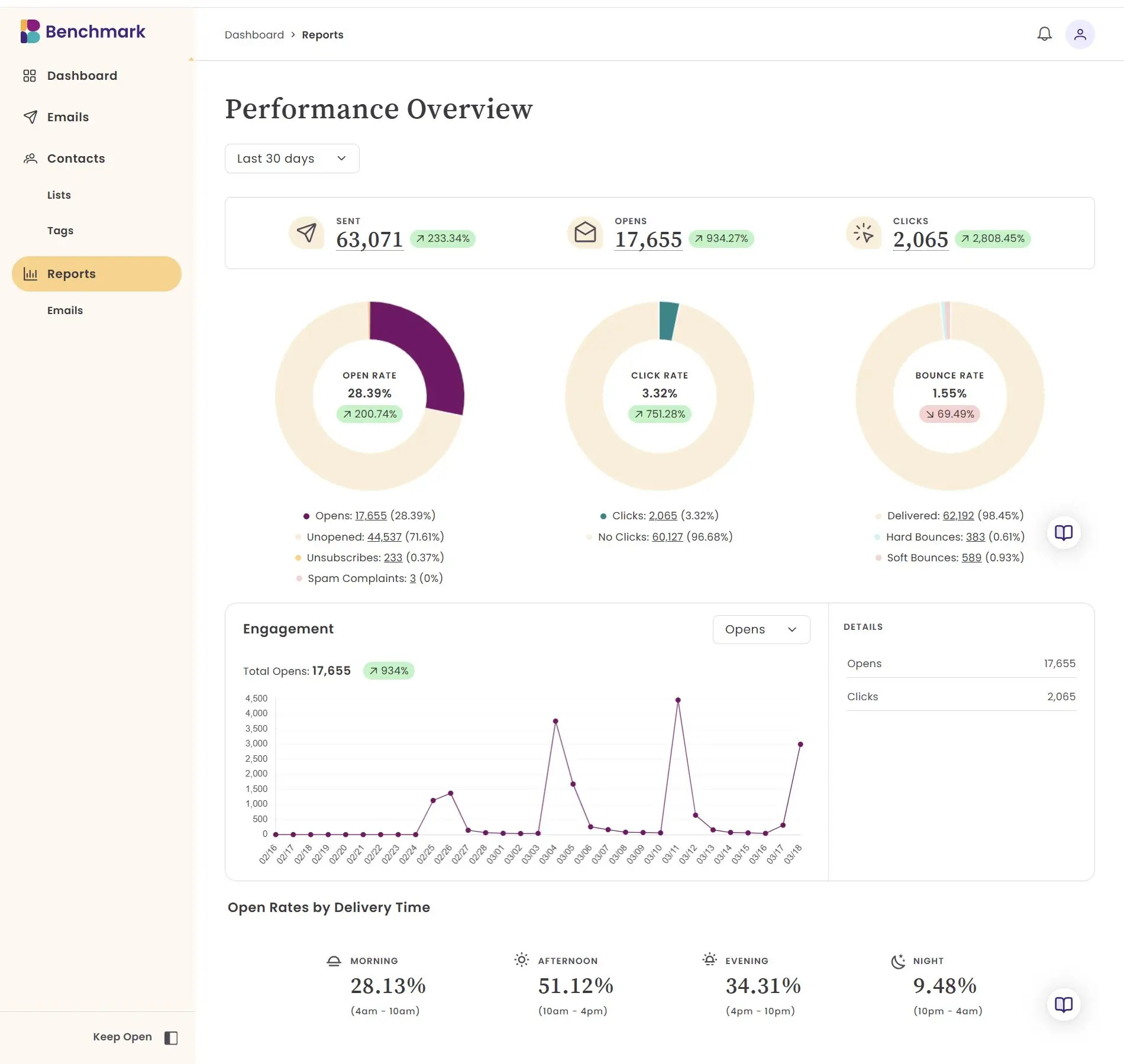
Highlight anything off-target and note potential causes; it could be a timing issue or poor SEO optimization, and it might be worth checking against past figures to add more context. Benchmark Email’s campaign dashboard makes this step quick and easy by gathering all your key metrics in one place.
2. Channel-specific review
Here you can dig deeper by looking at each marketing channel individually to measure performance against the KPI’s you know they’re geared towards.
- Email: Open/click rates, subscribers and unsubscribes, deliverability, and bounce rates.
- Social: Engagement, reach, follower growth, web traffic, conversion rates, interaction.
- Paid: ROAS, cost per click, conversions, CTR.
- Content and SEO: Top-performing posts, keyword rankings, search visibility, conversion from organic traffic.
Use your best judgment and past campaign data to determine what constitutes a significant deviation from your expectations. Flag any metrics that are dramatically over- or underperforming for later review. Remember, context matters. By tracking paid and organic KPIs in one dashboard, you can make more informed, winning decisions.
1. Content and creative
Here you will review your visuals and messaging for relevance, consistency, and quality.
- Are your headlines still relevant and accurate?
- Are calls to action clear and consistent across channels?
- Are your design elements aligned with your house style? Are they optimized in format and resolution for each use?
AI tools or specific design-audit plug-ins for CMS platforms can help save time by quickly churning through content and noting discrepancies in tone or quality.

Content Repurposing Masterclass: Turn One Idea into 10 Marketing Assets Webinar
DOWNLOAD NOW2. Check the budget and efficiency
You’re not looking to shake up your spending here thoroughly; you want to give campaigns and strategies time to play out before you pull the plug. Look for underperforming ads or campaigns that are still running past their end date, and shift small amounts to better support the high-performing channels. This keeps you agile without requiring a central forecast or lengthy analysis.
3. Verify data, tools, and compliance
This is a chance to avoid costly mistakes further down the line by ensuring your tracking software and CRM integrations are working as they should, and that your automation workflows are up to date and still functioning. Your contact list is fully compliant with local and national laws.
4. Next steps and ownership
As mentioned, these are not meant to provide a complete checklist of improvements that significantly change your campaign. Wrap up your 30-minute audit by choosing one or two actionable next steps. You should pause or fix an underperforming campaign, revamp your email marketing subject lines, or schedule a deep dive into one specific channel. Once you have decided on your project, assign a team member, set a due date, and check in at your next weekly audit. This way, you’re turning your audit into productive improvements, not just treating it as a data-gathering exercise.
Tools and resources to support your 30-minute audit
Your weekly audits are only effective if the correct tools reinforce them. Automation and visualization streamline your insights and help you stay consistent without having to dig through reports yourself. Here are some essential tools and categories to consider for your check-ins:
Email marketing platforms
Services like Benchmark Email centralize your campaign performance metrics in one dashboard. These reports help you optimize your audit by quickly identifying high and low-performing areas. You can also track automation and test new subject lines and templates, letting you test and refine your email marketing.
Analytics and dashboard tools
Platforms like Google Analytics 4 or Looker Studio can visualise traffic and conversion across platforms and channels. They allow you to create custom dashboards that let you gather your KPIs on one screen, under a 30-minute audit tab.
Social and SEO monitors
Social tools like Hootsuite or Buffer can show real-time customer engagement trends at a glance, while SEO tools like Semrush, Ahrefs, or Moz help you track keyword movement and backlink growth. Use their data visualization in your audit to identify unexpected traffic spikes or underperforming posts relative to previous metrics.
Project management and collaboration
Communication tools let you log and distribute your findings to keep your teams on the same page. You can track tasks and due dates, and conduct follow-ups to ensure your audit results in actionable change using software like Asana or Trello.
Presentations for Effective Communication
Presenting your audit findings is essential to ensure your team understands the results and can act on them effectively. While there are some new presentation tools like Gamma and Canva, when professionals need to present to their teams, they typically choose Microsoft PowerPoint and PPT templates. Using professional audit PPT templates can help you save time, enhance your message, and keep your audience engaged with visually appealing slides.
Marketing audit templates and checklists
Structured frameworks save time. You can use Benchmark Email’s resource page to find free email templates and webinars to fuel your process. Share these so teams can familiarise themselves with the details and offer suggestions or improvements to make your audit into an actual teamwide project.

These tools are best when they work together. For example, joining your analytics dashboards with your email campaign platforms creates a single source of data. Connect your email, analytics, and project management platforms to build a faster, more transparent audit that slots neatly into your weekly tasks.
Building the habit
Like any good behavior, consistency is key. Taking half an hour of your week to take stock, assess the situation, and correct course where required keeps your team synchronized and focused on the same objectives.
Each check-in with your team, driven by insights from your audit, is a chance to assess performance, praise great work, and anticipate future challenges, turning a weekly meeting into a strategic powerhouse as your continued momentum compounds results.
Efficiency tools aggregate your data and automate reporting, turning the small investment of a 30-minute weekly marketing audit into meaningful long-term gains.
About the Author:

High level marketing, technical email topics, email trends | Jessica Lunk is the VP of Growth Marketing at Benchmark Email, where she combines strategic flair with hands-on expertise to help busy marketers elevate their email game. Delivering timely insights on list hygiene, ROI, and email deliverability, she’s a go-to voice for practical marketing wisdom.

A powerfully simple email marketing platform
Sign up for free to see how effortless email marketing can be.
Our Company
Compare
Solutions
Compare
Account
© Polaris Software, LLC Benchmark Email® is a registered trademark of Polaris Software, LLC
© Polaris Software, LLC
Benchmark Email® is a registered trademark of Polaris Software, LLC