


Your December 2026 Email Marketing Calendar: 6 Emails to Send

Key Takeaways
- December has six distinct campaign windows: Giving Tuesday, a rolling welcome for new holiday sign-ups, a mid-month shipping deadline, a season’s greetings newsletter, a post-holiday offer for Boxing Week and year-end shoppers, and a New Year re-engagement send.
- Write and schedule your December emails in the first week, because once the holiday rush hits, there’s no good time to draft a thoughtful campaign from scratch.
- Appreciation sends (Giving Tuesday, season’s greetings) are just as strategic as promotional ones; subscribers who feel valued are more likely to open your offers when they arrive.
- December brings a natural wave of new website visitors; a pop-up sign-up form with a holiday perk turns that traffic into a list asset that keeps paying off in January.
- The final days of the year are your best opportunity to clean your list before the new year, and a quick re-engagement send now protects your sender reputation going into 2027.
- Canadian and US subscribers have different post-holiday buying hooks; a simple list filter lets you speak to both without sending two entirely different campaigns.
December is both the most exciting and the most exhausting month in email marketing. Inboxes fill up fast. Subscriber attention is spread thin. And the window between “I should send something” and “it’s too late to send something good” is shorter than it looks.
The antidote isn’t to send more. It’s to send smarter. December rewards the marketers who plan, mix promotional sends with genuine relationship-building, and know when to put the sales pitch down and just be human for a minute.
This email calendar gives you six campaigns to work with, spaced across the month so you stay present without becoming noise. Use all six or pick the ones that fit your business, but whatever you do, write and schedule them in week one before the chaos of the season takes over.
1. Start December with a Giving Tuesday thank-you
Send: Tuesday, December 1
Here’s the thing about Giving Tuesday: it falls the day after Cyber Monday, which means your subscribers have just spent 72 hours being marketed to by everyone they’ve ever heard of. The inbox is exhausted. A short, sincere thank-you with zero promotional intent is genuinely refreshing by comparison.
You don’t need a campaign, a graphic, or a discount. You need three or four sentences that feel like they were written by a real person who appreciates their audience. Tell them what this year meant to you, acknowledge a cause you care about, or simply say thank you for being along for the ride. The goodwill this builds heading into the busiest promotional stretch of your month is worth more than any offer you could attach.
Don’t underestimate the cumulative effect of gratitude in a month that gets transactional fast. Subscribers notice when you’re not always asking for something.
Subject line to try: “Thank you for a year worth celebrating”
Benchmark Email’s personalization tools make it easy to include each contact’s first name in the subject line or opening line. Set a “friend” fallback for anyone without a name on file so the email feels personal across your whole list.
2. Build your list while holiday traffic is high
Send: Week 1, then weekly for new subscribers
Most businesses focus on what to send in December. Fewer think about who they could be adding to their list while seasonal traffic is at its peak. December brings a meaningful uptick in new visitors: people gift-shopping, researching, and discovering brands they’d never come across before. A well-placed sign-up form turns a one-time visit into an ongoing relationship.
The key is making the offer worth it. A generic “join our newsletter” prompt won’t move the needle in December. A holiday perk like a gift guide, a checklist, or a first-purchase discount gives visitors a concrete reason to say yes. Then send new subscribers a brief welcome email that delivers the perk, sets expectations for what’s ahead, and gives them a reason to stay interested in January when the holidays are over.
This doesn’t require much lift once it’s set up. The sign-up form runs on its own, and your welcome email goes out automatically to each new subscriber. Set it up once in week one, and it works for the rest of the month.
Subject line to try: “Welcome aboard: here’s your holiday perk”
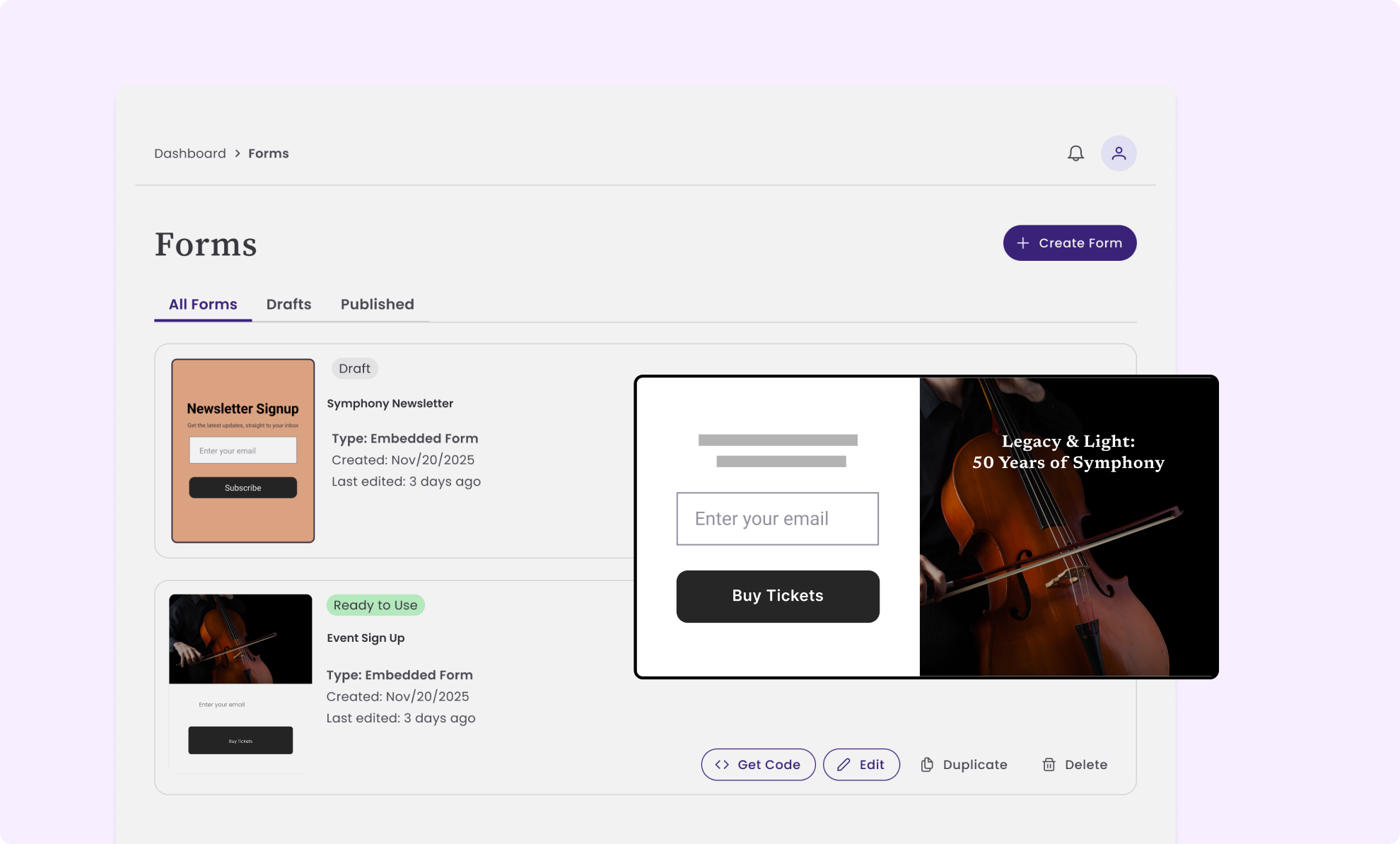
Benchmark Email’s sign-up forms let you configure when and how often a popup appears, and new subscribers can be tagged automatically so your welcome email reaches them and only them, not your whole list.
3. Send a last-call email before the shipping and booking cut-off
Send: December 10–14
Mid-December is when deadlines get real. The abstract idea of “getting something in time for the holidays” becomes a specific date, and for many of your customers that date is arriving faster than they realized. A clear, well-timed email that tells them exactly when they need to act is genuinely useful, not just promotional.
Lead with the deadline front and center. Don’t bury it. And make sure you have an answer for the subscriber who finds this email a day too late. A gift card, a digital product, a future booking, or a voucher gives them a path to still show up for the person they’re shopping for, even if the physical timing didn’t work out.
This is also one of the strongest use cases for a countdown timer in email. Seeing time left in real numbers creates a more visceral sense of urgency than “order by December 15” in plain text, and it does the work without you having to write another word.
Subject line to try: “Last day to order for holiday delivery”
The Timer block adds a live countdown to your email that reflects the actual time remaining when each subscriber opens it. Send a test to yourself first to confirm it renders correctly before it reaches your full list.
4. Send season’s greetings before the holiday weekend
Send: December 18–21
By the third week of December, your subscribers have opened more promotional emails than they can count. This isn’t the time to send another one. It’s the moment to be the brand that sent something warm, useful, and completely free of a discount code.
A season’s greetings email that includes your holiday hours or closure dates is quietly one of the most appreciated sends of the year. People want to know if you’ll be available, when to expect replies, and whether they can still reach you before the new year. Giving them that information proactively, wrapped in a genuine holiday message, earns goodwill that outlasts the season.
Add a small, practical tip related to your area of expertise, and you’ve given subscribers something they’ll actually use. That’s the standard for a good December newsletter: something useful enough to be glad you sent it, warm enough to feel like a holiday card.
Subject line to try: “Our holiday hours (and a warm thank-you).”
Write this one now and schedule it rather than relying on memory during the busiest week of the month. With Benchmark Email, you can schedule your emails by setting an exact send date and time, and they go out as planned whether or not you’re online.
5. Catch post-holiday shoppers with a Boxing Week or year-end offer
Send: December 26–28
The days right after Christmas are a bigger email opportunity than most businesses realize. For Canadian subscribers, Boxing Week (starting December 26, with December 28 observed as the holiday Monday in many provinces) is one of the year’s major retail moments. For US subscribers, the post-holiday week means gift cards to spend and an appetite for deals on things they actually wanted.
You don’t need two entirely different campaigns to reach both audiences well. The offer structure can stay the same: early access to a year-end deal, a post-holiday promotion, or a preview of what’s coming in January. What changes is the framing: Boxing Week language and hooks for Canadian contacts, gift card or year-end angle for US contacts. A quick list filter handles the routing so each group gets messaging that actually resonates.
Service businesses often overlook this window, but it’s one of the best times to offer a January booking, a year-end package, or a fresh-start consultation. Subscribers are already in a “new year, new plan” mindset before the calendar even flips.
Subject lines to try: “Your early access to our Boxing Week deals” (for Canadian contacts) or “Early access: our year-end deals are here” (for US contacts)
Benchmark Email’s contact segmentation makes it straightforward to filter by location or tags and send each version to the right audience without duplicating your entire campaign build.

6. Close the year with a re-engagement check-in
Send: December 29–3
A month of elevated sending volume is great for revenue. It’s less great for list hygiene. By the time December ends, you’ve accumulated a meaningful number of contacts who haven’t opened or clicked anything in 90 days or more, and carrying them silently into the new year means starting 2027 with inflated metrics and suppressed deliverability.
A re-engagement send in the final days of December fixes this cleanly. Email your inactive segment, ask plainly whether they still want to hear from you, and give them an easy way to say yes or quietly opt out. Keep the tone matter-of-fact: no drama, no guilt trip, just a genuine check-in. Re-engaged contacts become more valuable immediately. Contacts who don’t can be removed in January without regret.
This is also a good moment to remind yourself that a working unsubscribe link belongs in every email you send, every month of the year. CAN-SPAM and CASL both require it, but more practically, an easy opt-out protects your engagement metrics better than any re-engagement campaign can.
Subject line to try: “Still want to hear from us in 2027?”
List filters let you build a targeted send list of contacts who haven’t opened in a set timeframe. Pull that segment, send the check-in to them only, and start January with a list that reflects your actual engaged audience.

Putting it all together
Six campaigns over four weeks equals roughly one email per week, with a pair of sends in the final week. That’s a cadence that keeps you present through the noisiest inbox month of the year without overwhelming the people on your list.
The single most valuable use of your first week in December isn’t sending a campaign. It’s planning and drafting all six. The holiday season gets busy fast, and emails you write in a rush during week three never match the ones you wrote with a clear head in week one. Get them drafted, get them scheduled, and let Benchmark handle the delivery. You’ll have a better December and a cleaner list in January.
Frequently Asked Questions
How many emails is too many for December?
Most businesses do well with one send per week to their full list, plus any welcome emails sent only to new subscribers. That puts you at six or seven sends for the month, present without being overwhelming. If you’re in a highly promotional category like retail, a few extra sends around the shipping deadline and Boxing Week are normal. If you’re service-based, lean toward fewer and make each one count.
I don’t sell physical products. How do I make a shipping deadline email work?
Reframe the deadline around whatever time-sensitive action applies to your business: the last day to book a service before your holiday closure, the last day to purchase a gift card or digital product for a last-minute gift, or the cut-off for locking in year-end pricing. The underlying psychology (urgency created by a real, approaching deadline) works the same way regardless of what you’re selling.
What if my business doesn’t have Canadian subscribers? Do I still send a Boxing Week email?
If you’re US-only, skip the Boxing Week framing and lead with a year-end angle instead, something like “spend your gift cards” or “our year-end deals are live.” The post-holiday shopping behavior is real for US audiences too; they just need different language to get there.
When should I actually remove contacts after the New Year check-in?
Wait until mid-January before removing anyone. Some subscribers are genuinely offline or distracted during the holidays and will come back and engage once things settle down. Send the check-in between December 29–31, give it two full weeks to collect responses, then remove anyone still inactive around January 14 or 15.
What’s the best holiday perk to offer in a sign-up popup?
Something immediately useful tends to outperform a future discount. A gift guide built around your products, a checklist relevant to your audience’s needs, or a downloadable resource gives subscribers value the moment they sign up, no purchase required. Discounts work too, but they attract a different kind of subscriber (one who may disengage once they use the offer). Before deciding what to offer in December, think about who you want on your list in February.
About the Author:

Content Marketing Manager | Content marketing, inbound funnel, social media, email nurture | Natalie Slyman is an experienced Content Marketing Manager at Benchmark Email with a strong B2B background and a knack for crafting pillar content that boosts SEO and brand authority. She regularly shares actionable insights—from remote-work strategies to AI-powered content workflows—via blog posts and webinars tailored for busy marketers.