Key Takeaways
- Multi-purpose Tool: Email newsletters are used for content marketing, product updates, and upselling, with 80% of B2B marketers utilizing them.
- Business Benefits: They drive sales by targeting interested leads, increase website traffic, and establish brand authority.
- Core Qualities: Effective newsletters focus on a single purpose, maintain a consistent schedule, and provide unique industry insights.
- Quick Setup: Using tools like Benchmark Email, businesses can create and send professional newsletters in 15 minutes or less using drag-and-drop builders.
Email newsletters are an extremely popular route of communication for the majority of businesses. Go ahead and check your inbox right now. We’ll wait. See? At least one newsletter sitting there, right? That’s because they work.
Over 80% of B2B marketers send email newsletters as part of their content strategy. Why? Because they drive results.
In this article, we’re going to be looking exactly at how an email newsletter can benefit your business, some essential qualities of a well-performing newsletter, and even an easy-to-follow process for starting your own newsletter with Benchmark Email.
What is an email newsletter?
An email newsletter is exactly what it sounds like—a newsletter that lands in your inbox instead of your mailbox. Simple as that.
An email newsletter is just one type of email you should be sending, but unlike other emails, it can serve multiple purposes. The primary purpose, however, is to deliver informative content to the subscribers.
It can also be used to let your users know about any changes within your company, new features added to your software, the release of new products, or for upselling opportunities.
Email newsletters are sent at set intervals: daily, weekly, monthly, etc. They are a great way to engage with your users, and by sharing snippets of your latest articles, you will give them a reason to keep coming back to your site. Email newsletters are an essential component of your email marketing.
Why start an email newsletter?
Unlike social platforms that can change the rules overnight, an email list is yours. It gives you a direct line to subscribers, free from shifting algorithms.
- Reliable reach — your message lands where people look every day: their inbox.
- Full ownership of your contacts and data.
- Freedom to build deeper relationships without gatekeepers.
Why is it important to have an email newsletter?
Still on the fence? Here’s why email newsletters deserve a spot in your marketing toolkit:
1. Drives sales
If a person chooses to subscribe to a brand’s newsletter, it is because they are interested in receiving more information from them.
Your newsletter gives you a direct line to people who already want to hear from you, making them way more likely to buy.
Don’t lead with a hard sell, though. You want to focus your newsletter on sharing high-quality content to build trust and stay top of mind with your new subscribers. With that said, if you want to include a promo, time-limited offer, or explainer video, it’s not a bad idea. Doing so can help you increase your revenue and eventually close more deals.
2. Directs traffic to your site
People don’t usually know when you publish new content on your site. Most people don’t just come back to a website hoping that you’ve posted a new article.
But, if you send out a newsletter that includes mentions and links to your newly published content, it’s a great way to not only let your subscribers know about it but also give them an incentive to come back to your site.
3. Collects email addresses
Your newsletter is like an incentive for site visitors. First, you have to show them the great content you create by driving traffic to your blog. Once they engage there, you want to entice them to subscribe to your newsletter for more great content. This urges them to provide their contact information, including email addresses.
In turn, you can grow your email list and enroll them in your email marketing campaigns for continued nurturing.
4. Engages your audience
Most people check their emails at least once a day, making an email newsletter an effective and cheap way to connect with users.
By being a regular source of helpful information, you establish yourself as a thought leader in your niche, which is essential for building trust with your audience. Beyond that, you can showcase your content from other mediums, such as a podcast you host, webinars, your Youtube channel, or other social profiles.
Engaging your audience and building their trust are the first two steps towards building a loyal customer base.
5. Cheap and easy to set up
The common misconception around email newsletters is that they’re very tedious and time-consuming to create.
And sure, if you cram a whole blog post into it, it can take a long time. But in most cases, it is unnecessary. Nobody would read a long newsletter anyway.
All you need to create an email newsletter is a clear purpose for which you’re doing it: content promotion, sales, increased engagement, or whatever else your goals may be.
Once you have your purpose, you need an email automation tool to help you launch your newsletters. But more on that later.
Map out your strategy
Before you send your first email, decide what you want your newsletter to accomplish.
Start by answering these basics:
- Goal: Are you driving site traffic, sales, community engagement—or all three?
- Cadence: Pick a frequency you can keep up with (weekly, bi-weekly, monthly).
- Audience slices: Decide which segments will get which type of content.
- Voice and visuals: Document a mini-style guide so every send feels consistent.
- Tools: Outline the software you’ll use for design, automation, and tracking.
Essential qualities of a good email newsletter
Now that we’ve established why you need an email newsletter, let’s look at some points that make an email newsletter stellar.
It has a clear purpose
One common mistake people make when creating an email newsletter is cramming everything into it: new blog post alerts, social media posts, and new products, all in one place.
This is too much. A good newsletter is short, sweet, and dedicated to a singular task. If you’re just letting your subscribers know about your latest blog post, keep your product announcements out of the newsletter.
Also, you should keep your newsletter as short and digestible as possible: users should be able to understand what you’re sending them as why as soon as they see it. If your message is not immediately clear, people are very likely to click off.
It’s Consistent
This goes beyond just the day and time your newsletter is sent. Your subscribers need to know what to expect each time they see you in their inbox.
Be consistent with your format and the type of content you’re delivering. Also, your newsletter needs to provide something that the rest of your channels don’t.
This can be some user-generated content, discount codes, or anything else that your users can’t find on your social media or blog.
It taps into industry insights
You don’t have to be the only expert in your industry. You can get opinions from other thought leaders or influencers like yourself and make them a part of your newsletter by including quotes, tweets, links to content they’ve written about their favorite brands, whatever you want!
Your newsletter should be a fun, informative read. You want your readers to connect with the content, and you can do that by using humor or popular events/topics as hooks for attracting attention, interest, and engagement.
How to start your own email newsletter using Benchmark Email
Benchmark Email simplifies the newsletter creation process into a few easy steps:
- Sign Up: Register for a free Benchmark Email account.
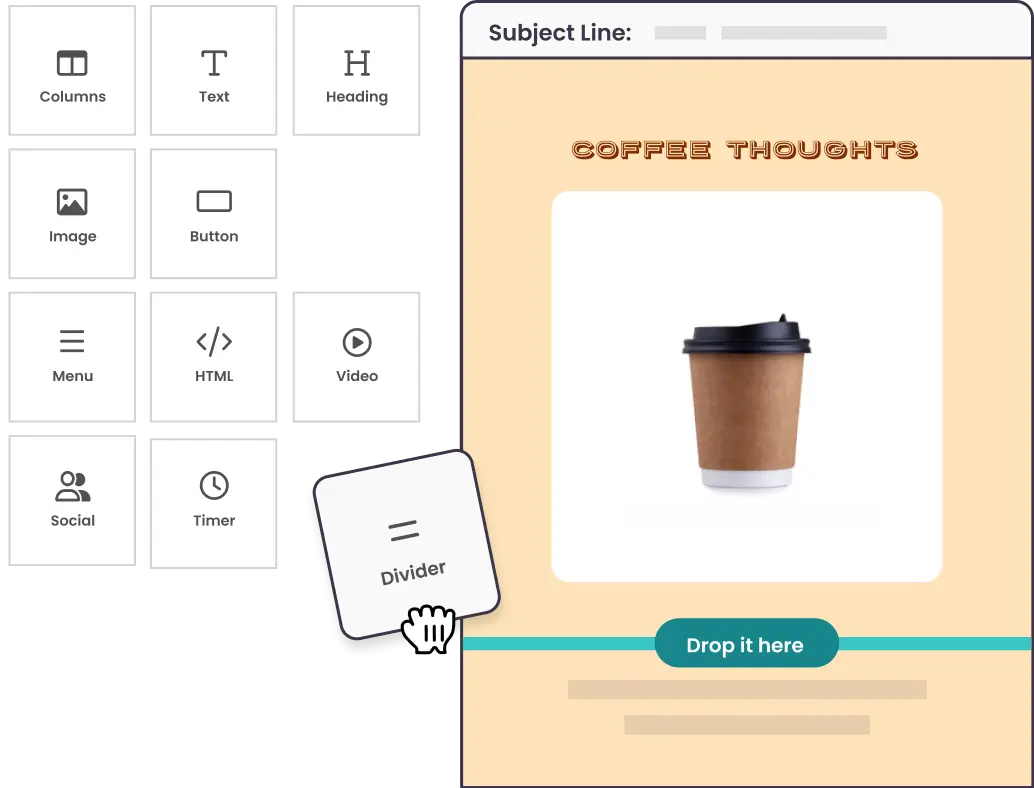
- Choose a Design: Use the drag-and-drop builder to create a custom design or select a pre-made template.
- Complete the Checklist: Follow the guided prompts to fill out the Email Checklist.
- Send: Launch your first newsletter in 15 minutes or less.
Email newsletters are vital for your email marketing strategy and business as a whole. Get started with your own and capitalize on your website traffic by turning visitors into subscribers, subscribers into leads, and leads into customers.

Sign up for a free Benchmark Email account today!
SIGN UP FREEFrequently Asked Questions
What is the 60/40 rule for email newsletters?
Keep about 60 percent of your email as written text and no more than 40 percent as images. This balance helps messages load fast, stay accessible, and pass spam filters. Benchmark Email’s editor shows your text-to-image ratio while you build, so you can keep your design on target.
What are the 5 C’s of effective email writing?
Follow the 5 C’s:
- Clarity – say what you need right away.
- Conciseness – trim extra words.
- Completeness – include all details and a clear call to action.
- Correctness – check spelling, links, and facts.
- Courtesy – use a friendly, respectful tone.
What is the 3-2-1 newsletter format?
The 3-2-1 format delivers 3 quick ideas from you, 2 thought-provoking quotes or links from others, and 1 question for readers to ponder or answer. It’s a simple way to create consistent, engaging content without much prep time.
What’s a good opening line for a newsletter email?
Use a personal greeting plus a value hint, for example: “Hi Alex, here’s a five-minute trick to sharpen your subject lines.” Naming the reader and teasing the benefit tells them the email is worth their time.