



Key Takeaways
- GDPR is permanent, not a passing requirement. Any business that collects or processes personal data from individuals in the EU must comply, regardless of where the company is based.
- Affirmative consent is the foundation. Whether your form is embedded or a pop-up, subscribers must clearly understand what they’re signing up for and actively agree to it.
- Never pre-check the consent box. Consent must be given freely, specifically, and unambiguously. Pre-checked boxes do not meet GDPR standards.
- Always link to your Privacy Policy. Users should be able to review how their data will be used before submitting their information, ideally in a new tab so they don’t lose their place on the form.
- Keep consent language simple and specific. Plain, clear wording outperforms legal jargon and helps subscribers feel confident about opting in.
- Document your consent. Recording the time, date, and IP address of each signup helps establish proof of consent and protects the integrity of your subscriber data.
- Respect consent as much as you collect it. Make it easy for subscribers to unsubscribe or update their preferences at any time.
- Compliance builds better marketing. GDPR-friendly forms attract higher-quality subscribers who genuinely want to hear from you, leading to stronger engagement and long-term trust.
- Benchmark Email is making it easier. A GDPR-friendly forms builder is available in the platform, simplifying consent collection and list growth.
The General Data Protection Regulation (GDPR) is now a permanent part of doing business online. For email marketers, that means making sure your signup forms are clear, transparent, and built around real user consent.
In this post, we’ll walk through how to create GDPR-friendly email sign-up forms and how Benchmark Email’s form tools will make compliance easier to manage over time.
Why GDPR still matters for email marketers
Since GDPR went into effect, it has shaped how businesses around the world think about data privacy. The regulation applies to any organization that collects or processes personal data of individuals in the European Union, regardless of where the organization is based. That means a small business in North America or Asia can still be subject to GDPR requirements if even a single subscriber lives in the EU.
Beyond the legal requirements, GDPR has reframed the relationship between brands and their audiences. Subscribers now expect transparency. They want to know what they’re signing up for, how their data will be used, and how they can opt out if they change their mind. Meeting these expectations isn’t just about compliance; it’s about building trust and earning long-term engagement from the very first interaction.
How to create GDPR-friendly sign-up forms
Whether your form is embedded on a page or appears as a pop-up, the most important requirement under GDPR is clear, affirmative consent. Users must understand what they’re signing up for and how their data will be used.
A simple consent checkbox paired with a privacy policy link is a common and effective approach. The checkbox should be unchecked by default, the language should describe exactly what the subscriber is agreeing to, and the privacy policy link should be easy to access before the user submits the form.
When designing these forms, keep the following principles in mind:
- Keep it simple. Only ask for the information you truly need. Collecting fewer data points reduces compliance burden and makes the signup process friendlier for users.
- Be transparent. Clearly state what kinds of emails subscribers will receive and how often they can expect to hear from you.
- Give users control. Make it easy for subscribers to update their preferences or unsubscribe at any time.
Writing Clear Consent Text
The language you use on your sign-up form plays a major role in compliance. Vague or generic wording can leave your business exposed, while overly technical copy can confuse users and hurt conversion rates. The goal is simple: plain language that makes the opt-in meaningful.
Example consent text: I have read and agree to the Privacy Policy.
Link to your Privacy Policy so it opens in a new tab or window, allowing users to review it without losing their place on the form.
Consent language should always be clear, specific, and unambiguous, and never pre-checked. If you offer multiple types of communications (for example, a weekly newsletter and promotional offers), consider allowing users to opt in to each option separately so their consent reflects what they actually want to receive.
How Can I Demonstrate Consent?
Demonstrating consent means being able to show when and how a subscriber opted in.
Email sign-up forms typically record key information, such as the time, date, and IP address associated with a signup, to help establish proof of consent if needed. This information supports compliance while protecting the integrity of subscriber data.
Just as important as collecting consent is respecting it. Subscribers should always have easy access to unsubscribe or manage their preferences. Including a visible unsubscribe link in every email, honoring opt-out requests promptly, and maintaining up-to-date records are all key parts of a compliant email program.
Final thoughts
GDPR compliance isn’t just about checking a legal box; it’s about building trust from the very first interaction. Thoughtfully designed sign-up forms help protect your brand, respect your subscribers, and create stronger email relationships over time.
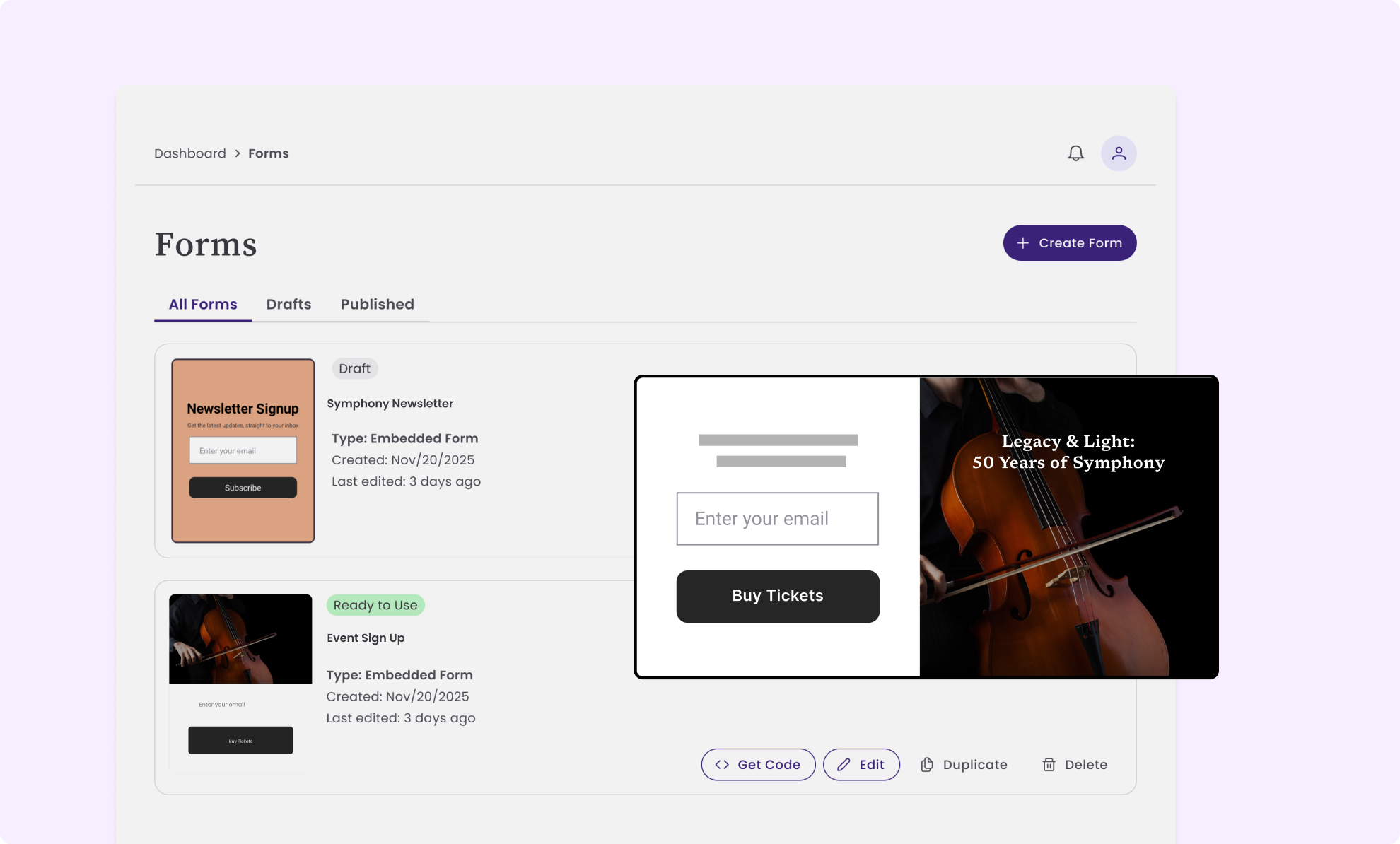
With GDPR-friendly forms as a part of Benchmark Email, managing consent and growing your list will be simpler and more transparent than ever. And if you’re collecting contacts through external tools or your website, Benchmark’s API lets you sync them directly into compliant lists without manual imports.
Frequently Asked Questions
Does GDPR apply to all email sign-up forms?
GDPR applies if you collect or process personal data from individuals in the EU, regardless of where your business is located.
Is a checkbox required for GDPR compliance?
While not strictly required in every case, a clear opt-in checkbox is one of the easiest ways to demonstrate affirmative consent.
Can I pre-check the consent box?
No. Consent must be given freely and explicitly. Pre-checked boxes do not meet GDPR standards.
Should users be able to access my Privacy Policy from the form?
Yes. Users should be able to review how their data will be used before they submit their information.
How do GDPR-compliant forms support better email marketing?
Clear consent leads to higher-quality subscribers who actually want to hear from you—resulting in better engagement and long-term trust.
Does Benchmark Email support GDPR-friendly forms?
Yes. Benchmark’s platform has a built-in form creator, making it easier to collect consent, manage subscribers, and grow your list responsibly.
About the Author:

High level marketing, technical email topics, email trends | Jessica Lunk is the VP of Growth Marketing at Benchmark Email, where she combines strategic flair with hands-on expertise to help busy marketers elevate their email game. Delivering timely insights on list hygiene, ROI, and email deliverability, she’s a go-to voice for practical marketing wisdom.