


15 Must-Have Content Marketing Tools to Ensure Quality and Consistency

Key Takeaways
- Specialization matters: The best content programs use purpose-built tools for each phase of production, not one platform that does everything adequately.
- AI is now a core part of the content stack, not an optional add-on, from drafting to optimization to performance analysis.
- Multi-channel distribution requires tools that help you reach audiences across email, social, video, and AI search at the same time.
- Data-driven decisions separate teams that consistently improve from those that produce content and hope for the best.
- Email is still the highest-ROI distribution channel for most content programs. The right email platform belongs in every content marketer’s stack.
Content marketing has never been more competitive or more essential. Whether you’re a team of one or managing a full content operation, the right tools can mean the difference between content that converts and content that just…sits there.
The tools below cover the full content lifecycle: ideation, creation, SEO and AEO optimization, distribution, and performance tracking. You don’t need all fifteen on day one, but each one solves a real problem content marketers face consistently.
Tools for Content Creation
1. AI Writing Assistants (Claude, ChatGPT, Gemini)
In 2027, AI writing assistants will be a standard part of the content marketer’s toolkit. They’re most effective as drafting and editing partners: generating first drafts to react to, suggesting headline variations, rewriting sections for tone, and helping you get unstuck when you’re staring at a blank page.
The key is treating AI output as a starting point, not a finished product. The best content programs use AI to accelerate production and then apply human judgment, expertise, and brand voice in the editing pass.
2. Grammarly
Grammarly has evolved well beyond spellcheck. Its tone detection, clarity suggestions, and consistency-checking features help content teams maintain quality across multiple writers and formats. The Pro and Enterprise plans include team-level style guides and brand tones that help enforce consistent brand voice at scale.
Best for: Teams that produce high volumes of written content and need a quality check layer before publication.
3. Canva
For content marketers who need to produce social graphics, blog headers, email visuals, and presentation decks without a dedicated designer, Canva remains one of the most accessible and capable tools available. Its Brand Kit feature enforces visual consistency across all outputs.
Best for: Small teams producing visual content across multiple channels without dedicated design resources.
4. Loom or Vidyard (Video)
Video content has become a core format for B2B and B2C content marketing alike. Loom makes it fast to create screen-recorded tutorials, product walkthroughs, and personal messages. Vidyard adds analytics and CRM integrations for teams that want to track viewer engagement.
Best for: Any team incorporating video into blog posts, email campaigns, or lead nurture sequences.
Tools for SEO and AEO Optimization
5. Semrush or Ahrefs
Both platforms offer comprehensive keyword research, competitive analysis, backlink auditing, and content gap analysis. In 2027, both will also add features to optimize content for AI search engines, an increasingly important consideration as AI-generated answers affect click-through rates from traditional search.
Best for: Content teams with an SEO mandate and the budget for a full-featured research platform.
6. Surfer SEO
Surfer analyzes the top-ranking content for any target keyword and provides specific recommendations for your content’s structure, length, keyword density, and headings. It’s particularly useful for content briefs and real-time optimization while writing.
Best for: Teams producing SEO content at volume who want a faster path from keyword to optimized draft.
7. AlsoAsked or AnswerThePublic (AEO Research)
As AI answer engines become more prominent in search, understanding the questions your audience is asking, not just the keywords they’re typing, has become more important. These tools surface the related questions that signal what your content needs to answer to perform well in AI-generated search results.
Best for: Teams building content strategies with AEO (Answer Engine Optimization) in mind.
Tools for Content Planning and Collaboration
8. Notion or Airtable (Content Calendar)
A content calendar is the backbone of any consistent content program. Notion and Airtable offer flexible, visual planning tools you can customize to your team’s workflow, including tracking content status, deadlines, assigned writers, and distribution plans in one place.
Best for: Teams of two or more who need a shared, transparent content planning system.
9. Typeface
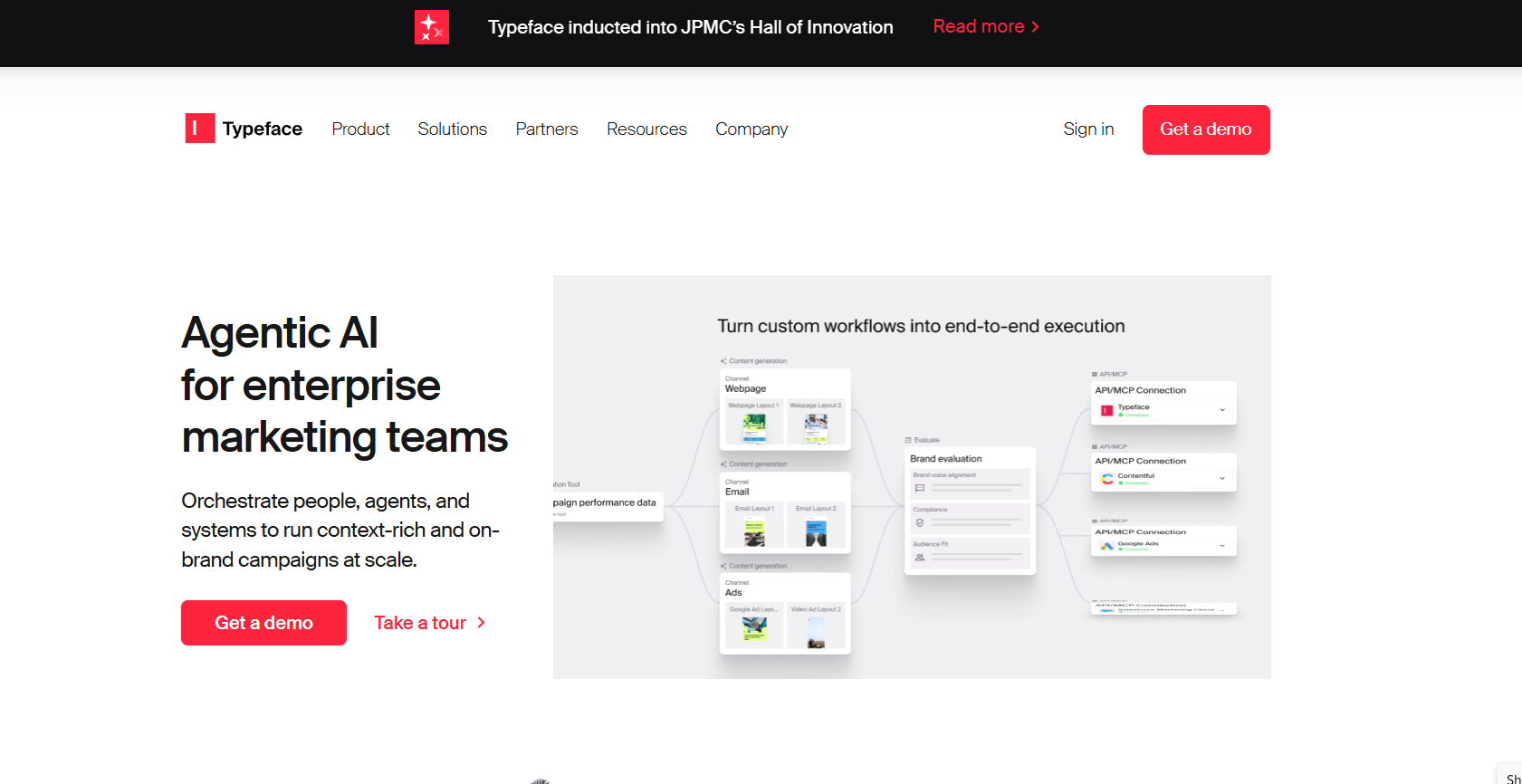
Typeface is an enterprise AI marketing platform that helps brands run on-brand campaigns at scale. It stores your brand guidelines, audiences, and assets in one place, and its AI agents use them to plan, create, and refine content from a single goal you describe. Creative teams can make channel-ready variations right inside Figma, Photoshop, or Illustrator. Enterprise-grade security and governance controls are built in.
Best for: Enterprise marketing and creative teams that produce a lot of content across channels and need strict brand consistency and governance.
Tools for Distribution
10. Benchmark Email
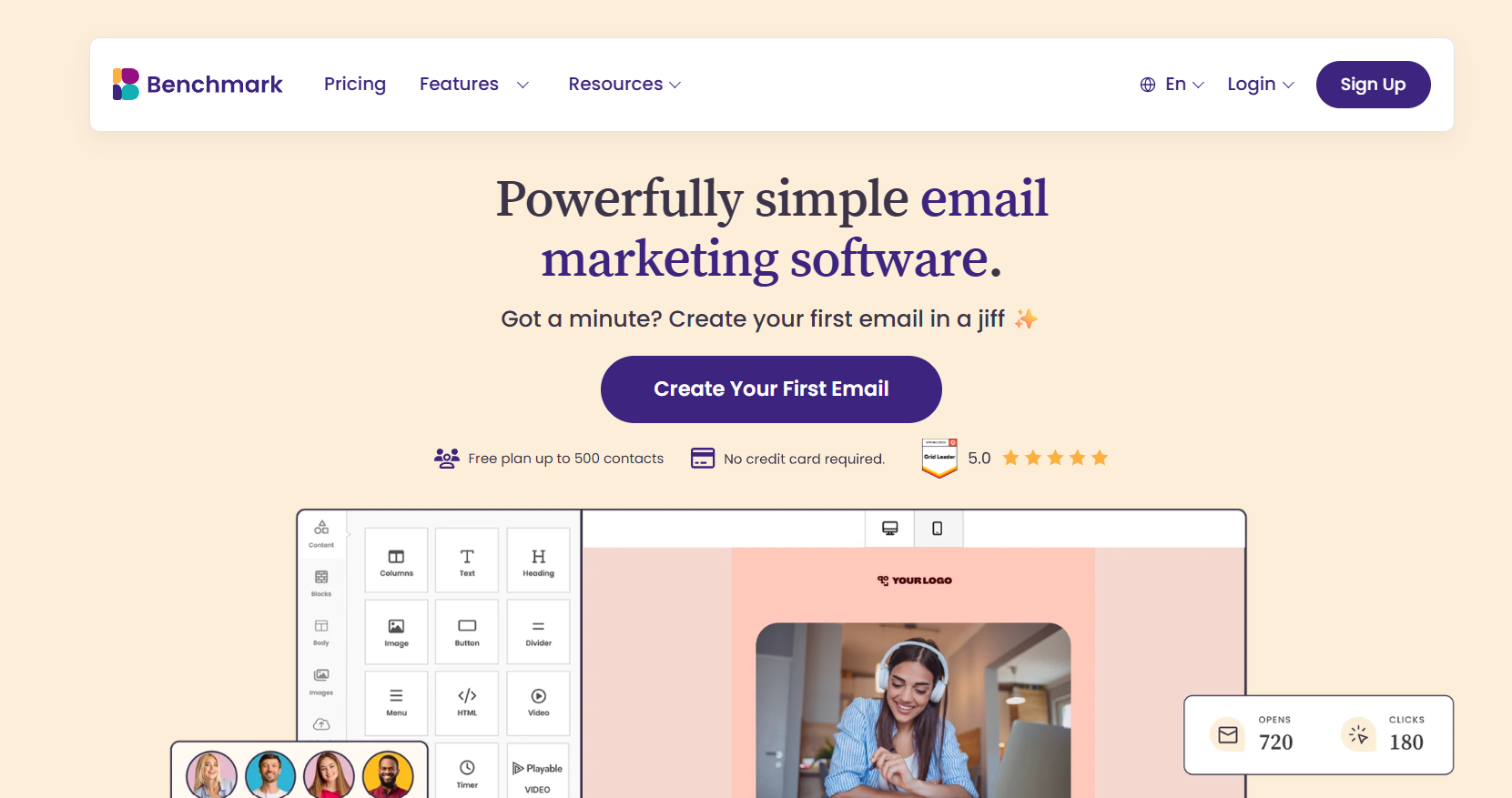
Email is consistently the highest-ROI distribution channel for content marketing. A dedicated email platform lets you deliver content directly to subscribers who’ve opted in, without relying on social algorithms or paid amplification.
Benchmark Email’s drag-and-drop email builder makes it easy to create beautiful emails, and our brand kit helps ensure each email stays consistent with your brand for better inbox recognition. Use our contact management tools to tag contacts by topic interest, then segment your lists to send tailored content. Lastly, track which content drives the most engagement by viewing our extensive reporting, giving your content program a direct feedback loop on what’s resonating.
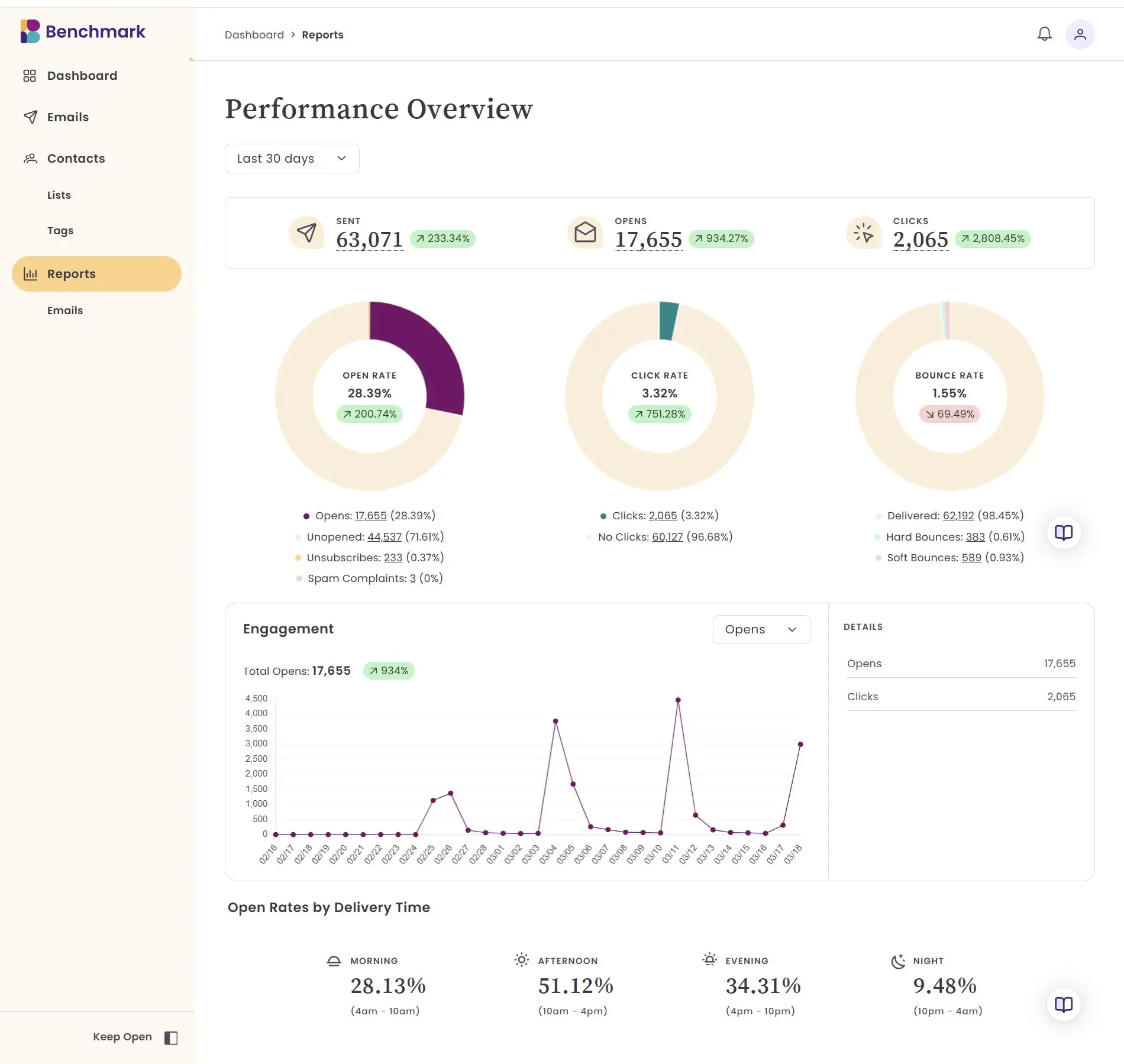
Best for: Any content program that includes email distribution (which should be all of them).
11. Buffer or Hootsuite (Social Distribution)
Scheduling and publishing tools for social media distribution allow content teams to batch their social work and maintain a consistent posting cadence without being online around the clock. Both platforms offer analytics to track what’s performing and what’s not.
Best for: Teams distributing content across multiple social channels.
12. Emplifi (Enterprise Social and Content Analytics)
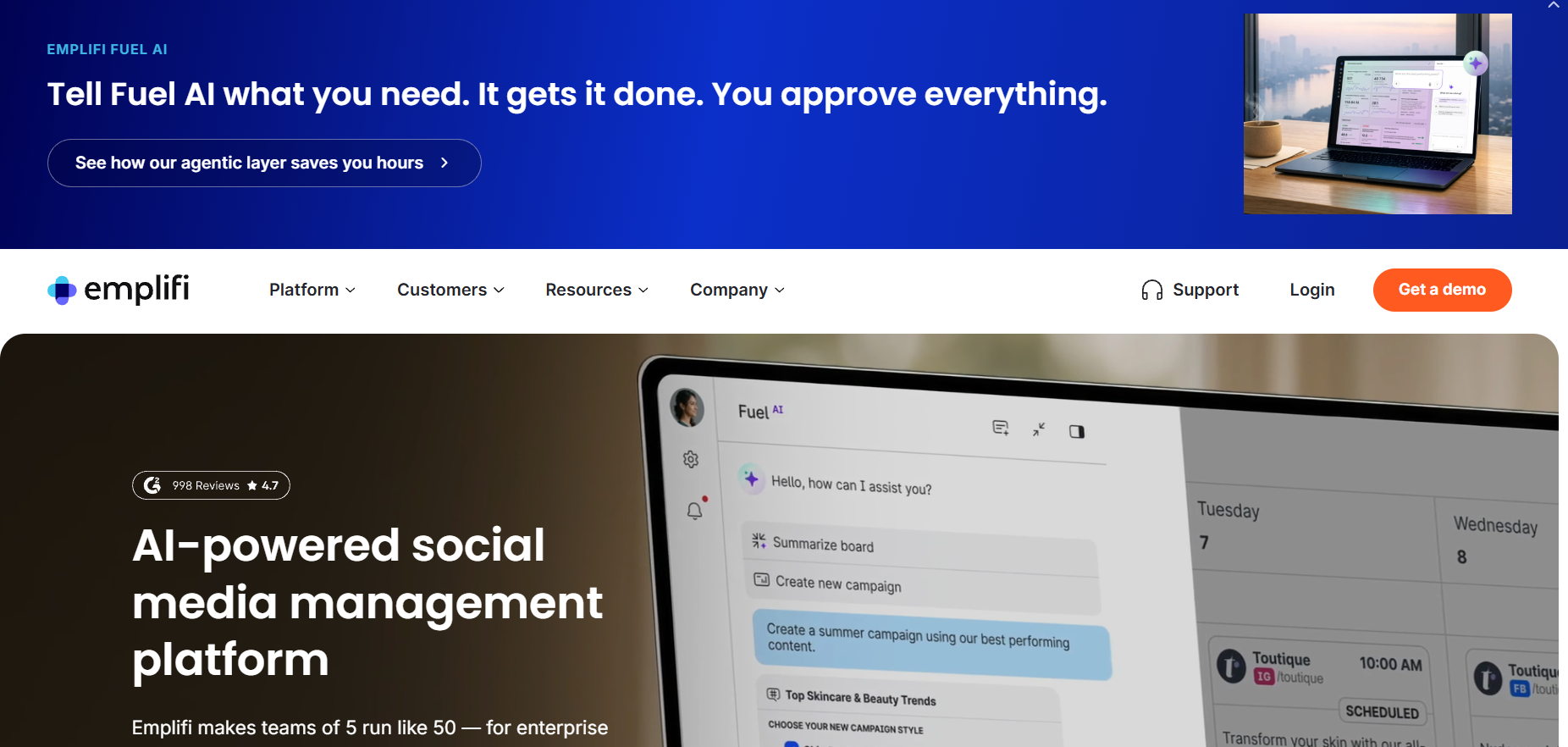
For larger teams managing complex social and content programs, Emplifi provides unified analytics, publishing, and reporting across channels. It also includes social listening features that help content teams understand what’s resonating in their market.
Best for: Enterprise or agency content teams managing high-volume, multi-channel programs.
Tools for Analytics and Performance Tracking
13. Google Analytics 4
GA4 is the foundation of content performance measurement for most teams. It tracks traffic sources, on-page behavior, conversion paths, and audience demographics. Understanding how people find your content, what they do with it, and where they drop off is essential for improving your program over time.
Best for: Every content team. This is non-negotiable.
14. Hotjar (by Contentsquare) or Microsoft Clarity
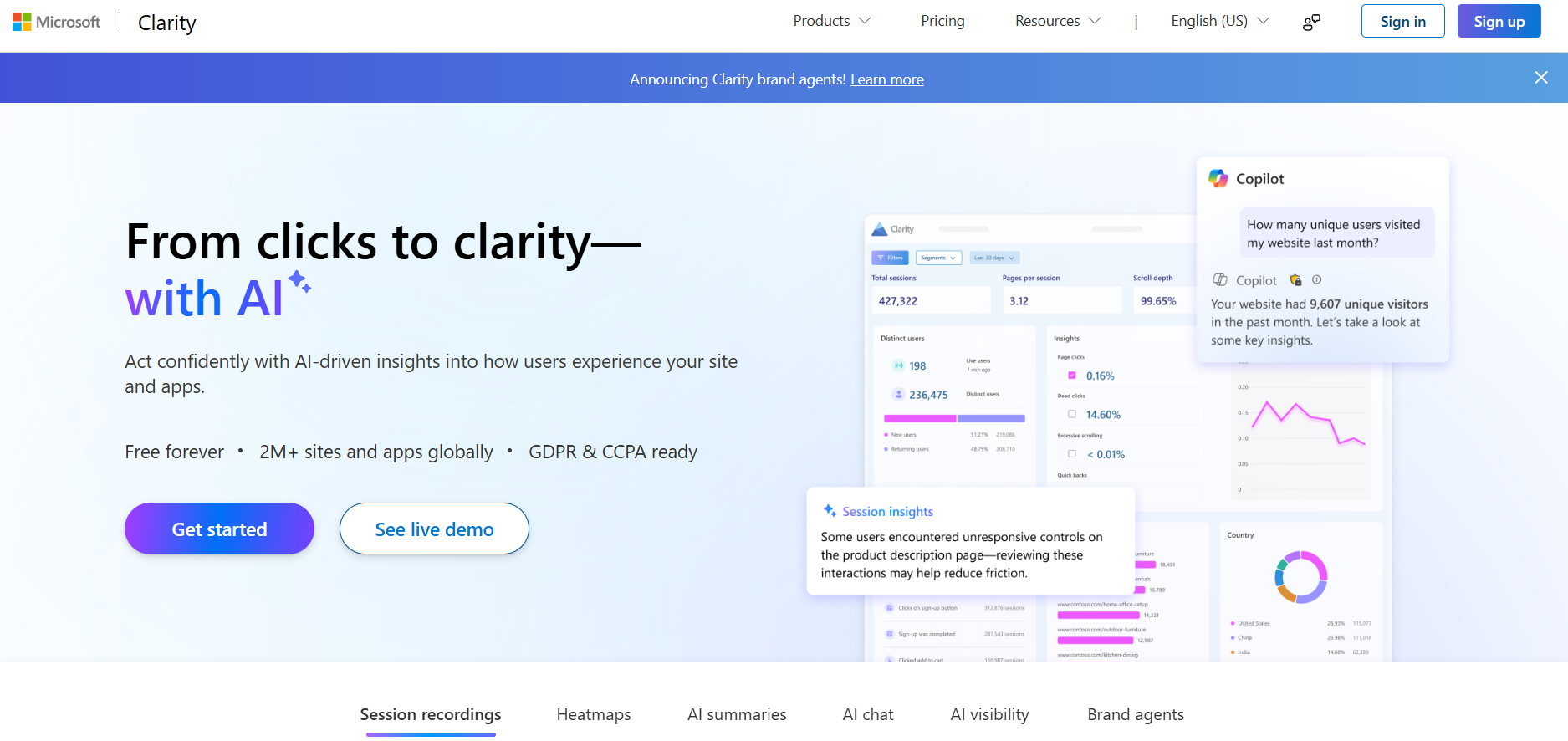
These tools provide session recordings and heatmaps that show how people interact with your content once they’re on your page, such as where they scroll, what they click, and where they leave. It’s qualitative data that complements the quantitative reporting from GA4.
Best for: Teams optimizing long-form content, landing pages, or lead capture flows.
15. SurveyMonkey or Typeform (Audience Research)
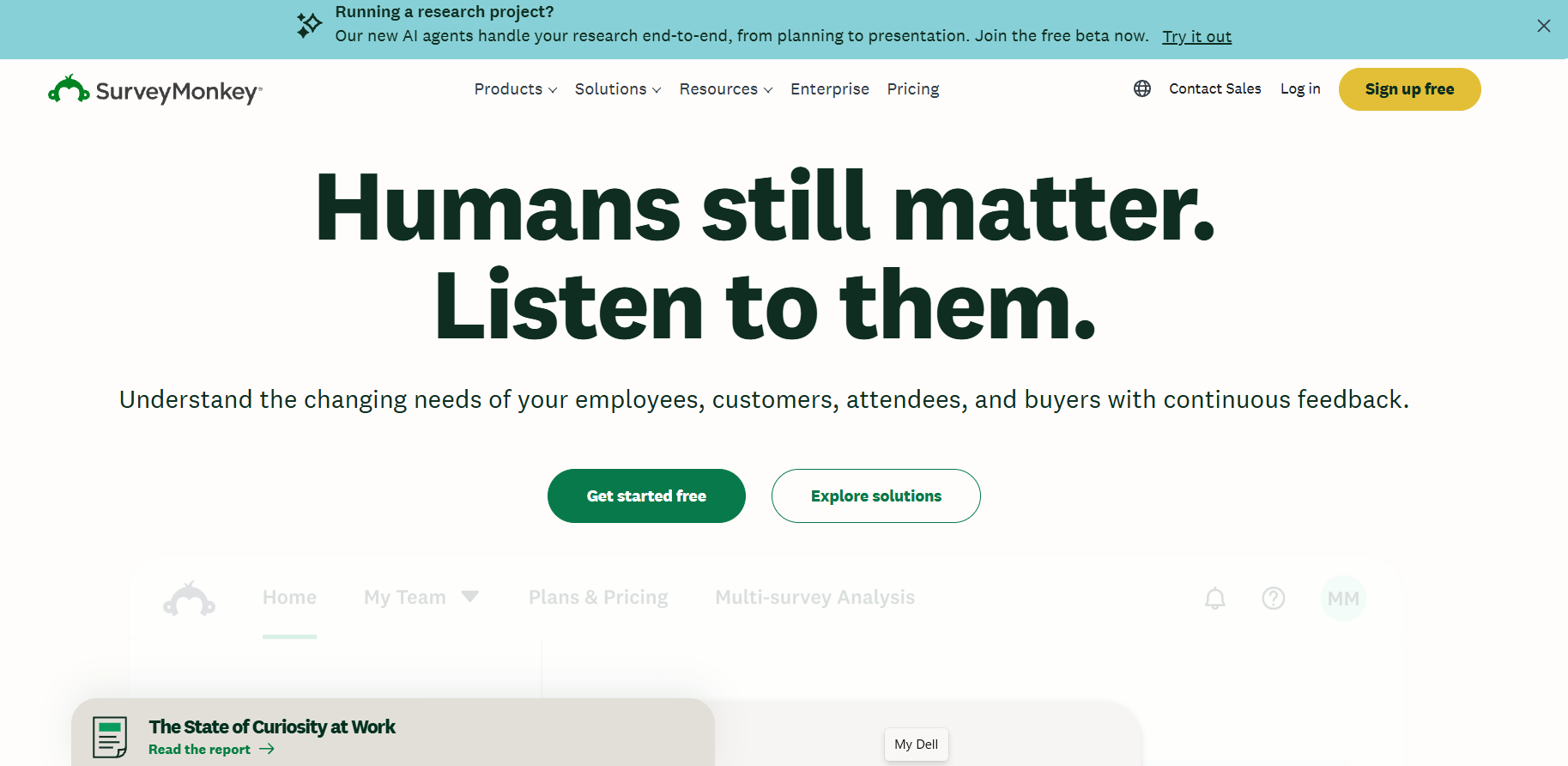
The best content programs don’t just track what their audience does; they ask what they want. Regular audience surveys surface topic ideas, format preferences, pain points, and gaps that behavioral data alone can’t reveal.
Best for: Teams that want to build content strategies driven by actual audience input rather than assumptions.
A Note on AI in Content Marketing in 2027
The content marketing tool landscape has changed significantly as AI tools have matured. In 2027, the most effective content teams won’t be debating whether to use AI. They’re figuring out where it adds the most value in their workflow.
The consistent answer: AI accelerates production and reduces friction. It doesn’t replace subject matter expertise, brand voice, or the judgment that makes content actually worth reading. The teams winning in content marketing use AI to produce more efficiently, then spend the time saved on the quality and originality that differentiate their content from the AI-generated noise the internet now contains at scale.
Frequently Asked Questions
Do I need all 15 tools to run an effective content marketing program?
No. Start with the essentials: an AI writing assistant, a grammar checker, a keyword research tool, an email platform, and Google Analytics. Add tools as your volume and team size grow. More tools don’t automatically mean better content.
What’s the difference between SEO and AEO for content?
SEO (Search Engine Optimization) optimizes your content to rank in traditional search results. AEO (Answer Engine Optimization) optimizes your content to be surfaced by AI answer engines like Google’s AI Overviews, ChatGPT, and similar tools. In 2027, both will matter, but AEO requires focusing on clearly answering specific questions, not just ranking for keywords.
How should small content teams prioritize their tool budget?
Email platform and analytics first (both have strong free tiers). Then keyword research, which pays for itself quickly if you’re producing SEO content. AI writing assistance is often free or low-cost for individuals. Design tools like Canva have generous free plans. Start lean and upgrade where you hit specific bottlenecks.
Are AI writing tools replacing content marketers?
No. They’re changing what content marketers spend their time on. The production parts of writing (drafting, formatting, generating variations) are becoming faster. The high-value parts, like strategy, expertise, originality, brand voice, editorial judgment, remain distinctly human.
How often should I audit and update my content marketing stack?
Annually at minimum. The tool landscape changes quickly, and tools that were best-in-class two years ago may have been surpassed or may have changed significantly in pricing or features. A brief annual review of each tool in your stack against current alternatives is worth the time.
About the Author:

Content Marketing Manager | Content marketing, inbound funnel, social media, email nurture | Natalie Slyman is an experienced Content Marketing Manager at Benchmark Email with a strong B2B background and a knack for crafting pillar content that boosts SEO and brand authority. She regularly shares actionable insights—from remote-work strategies to AI-powered content workflows—via blog posts and webinars tailored for busy marketers.